Monday, October 23, 2006

Miscellaneous pics from Kirstenbosch and Tortoise True Love

Since I'm staying at Kirstenbosch Botanical Garden while I'm doing my field season, I have the opportunity to walk the paths around the garden almost every day. This posting is just a bunch of miscellaneous pics from walks taken on Thursday.

This first one is a work crew who is restoring the sign for "Smuts Pad" (Jan Smuts path) at the junction of the controu path and the trail up through Skeleton's Gorge. We walked up Skeleton Gorge on Sunday, but that's the subject of another post. Right now I'm about four days behind in processing my pictures and in getting things posted to the blog. That's because my days are pretty full right now and I don't have a lot of spare hours to sit at my computer to catch up on my posting. I'll eventually catch up, but not today.
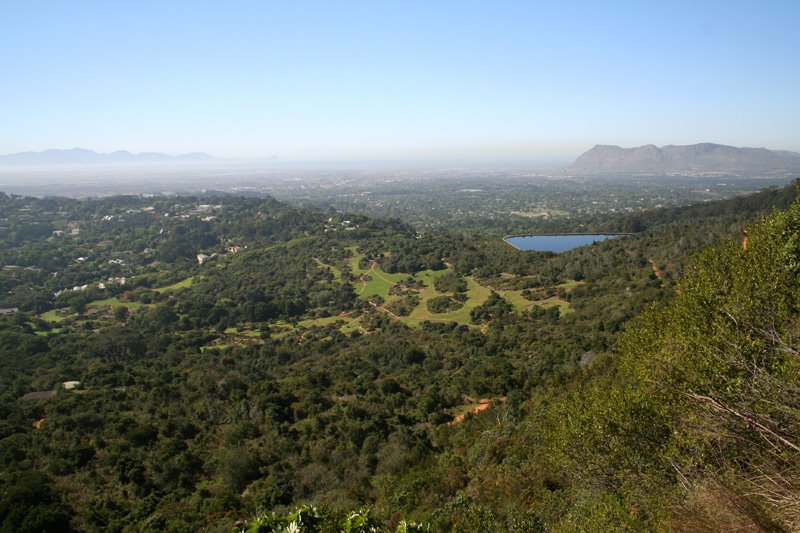
This is one of the view of Kirstenbosch from the contour path of Table Mountain. I've been walking up to the contour path once or twice a day ever since I arrived in Cape Town. That's so that I can get in shape for the big hike this coming weekend in the Hexrivierberg. I need to work on my cardiovascular conditioning and strengthening my legs. We'll have an elevational change of about 1400 meters this weekend - all slogging uphill the first day and down the next. Thus, my walks up the flanks of Table Mountain to get a good, long workout.


Along the path I usually walk on the contour, we pass over four ravines/streams. The first one on the western end of the walk is Window Gorge, then Skeleton Gorge, then Nursery Ravine, and finally, Vaalkat Ravine. The habitats and vegetation change dramatically along the path, which is one of the reasons I enjoy walking it.

This is a view looking up Nursery Ravine from the contour path.
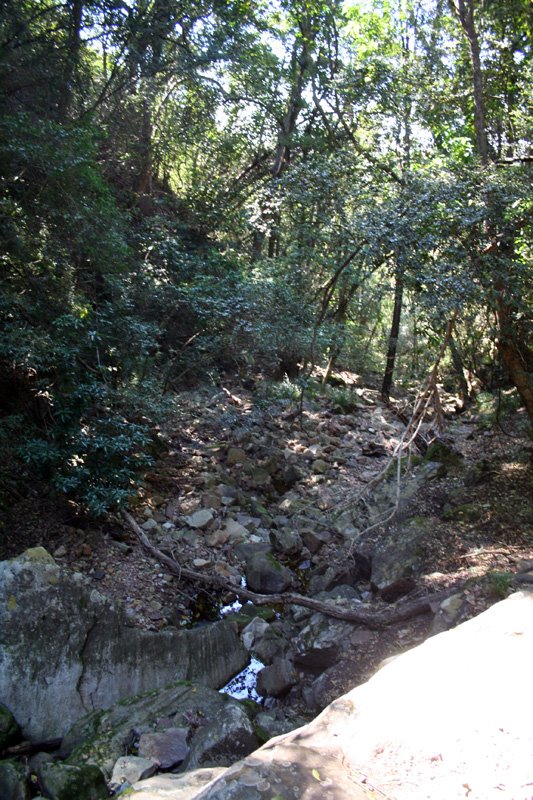


This is the view looking down Nursery Ravine. You can't really get the perspective of the slope, which is pretty steep.
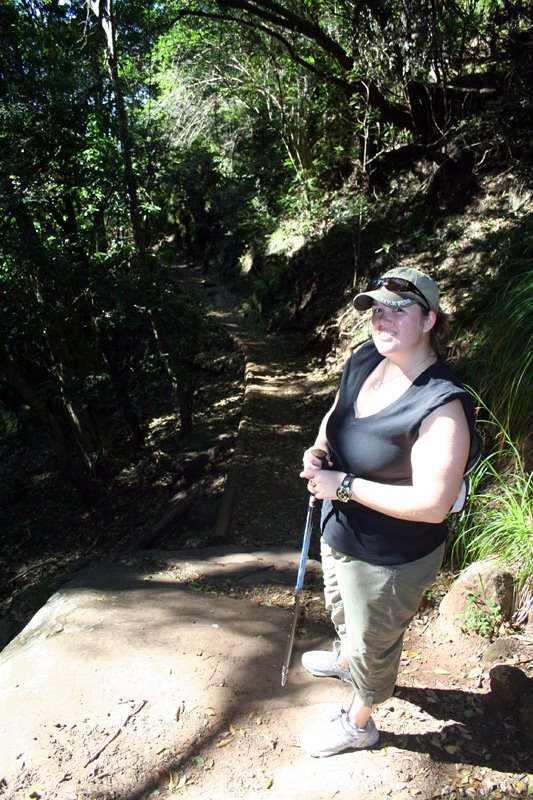


Here's Esprit on the edge of Nursery Ravine. Esprit has been such a big help to me during this field season. She's also been a real trooper with all of the conditioning hikes we've been doing.
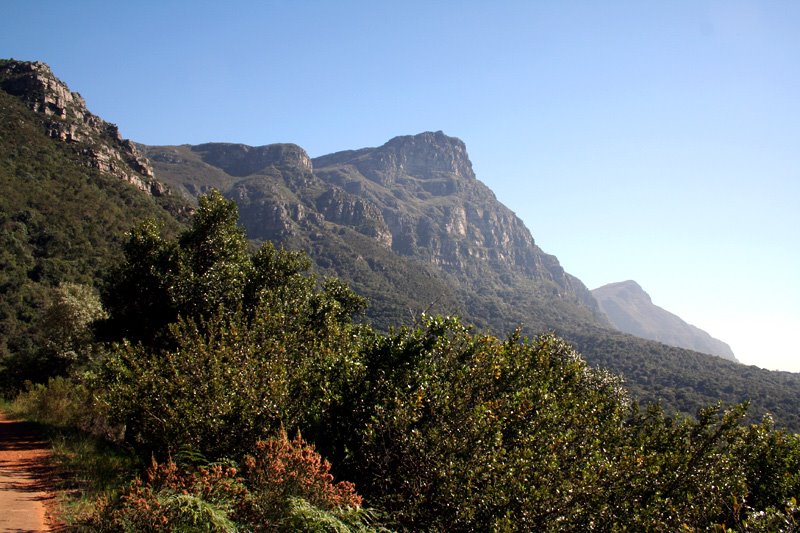


After we come down from the contour path, there's a road that goes by the Kirstenbosch reservoir. This is a view looking to the west. The large prominence of the backside of Table Mountain is called Fernwood Buttress. That's the view of Table Mountain I see everyday while I'm at Kirstenbosch.
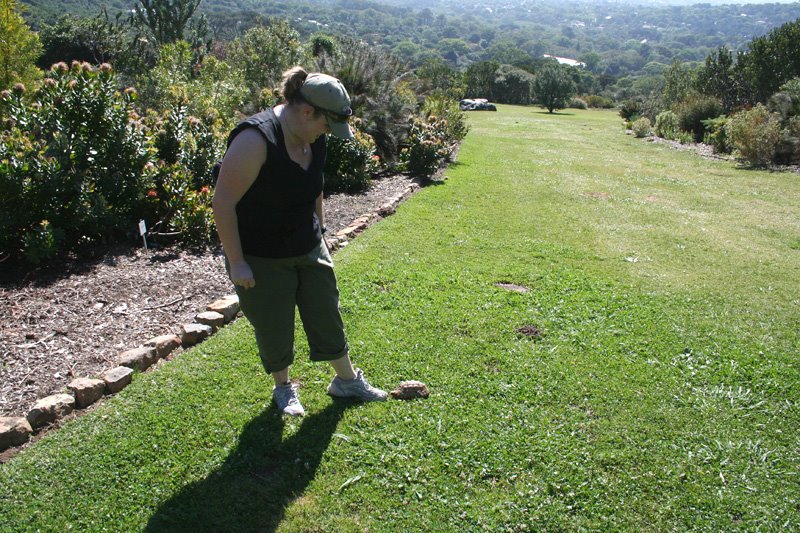


Going down the hill to the next level you reach the upper part of the cultivated gardens at Kirstenbosch. On Thursday morning we came across a padlopertjie (small road walker). This is a small tortoise that can move rather fast. It took a real shine to Esprit's shoe.
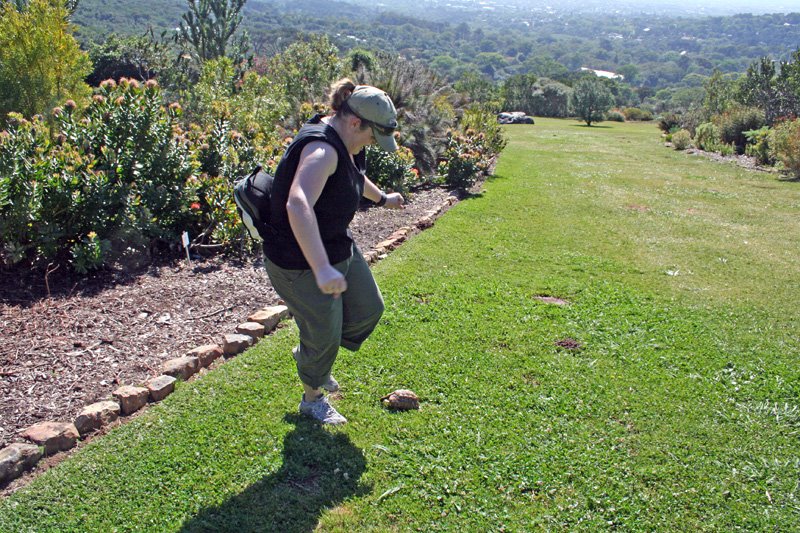


In fact, it literally ran after her, chasing her shoe.


"Where have you been all my life? Will you marry me?????"
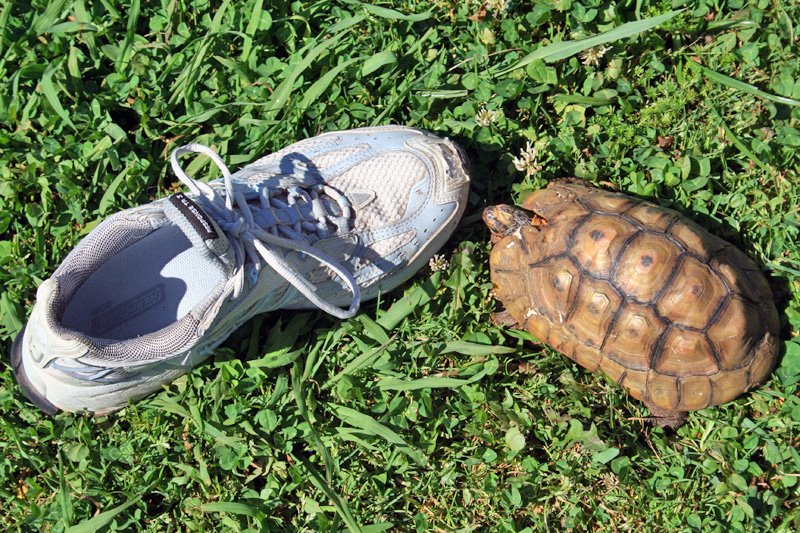


"Come away with me. You don't need the human."
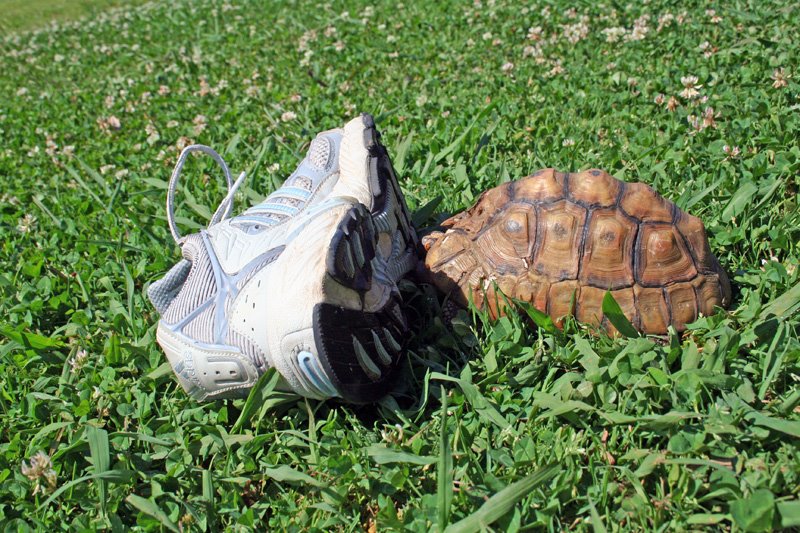


"I'll never let you go. You must stay with me!"
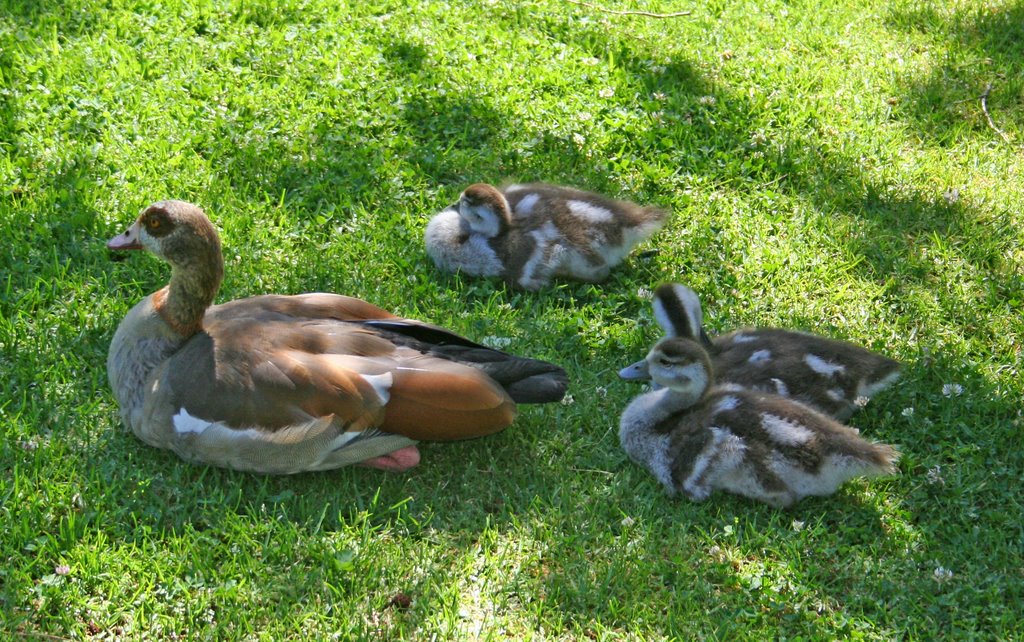


This is a mother Egyptian goose and her babies. I'd normally say, "goslings," but the Egyptian goose is really just a very large duck, so these are ducklings.
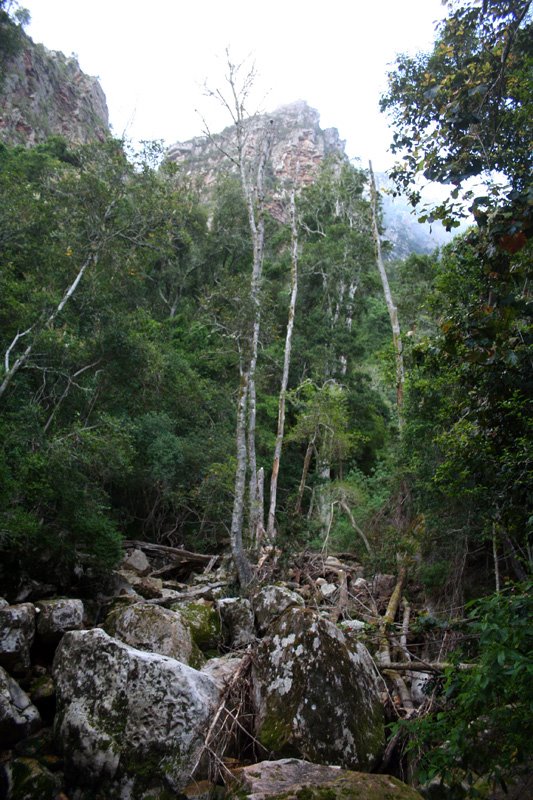


The second walk of the day was in the late afternoon through dark. Dennis and Gigi Laidler walked the contour path with us. This is a view of Window Stream from the contour path.


One of the things we all enjoy doing on these evening walks is to take pictures of plants and other interesting sites. It is usally dark by the time we come down the mountain, so lighting becomes a bit dodgy and pics are often blurry.

Here's Dennis steadying his camera with the aid of his walking stick.
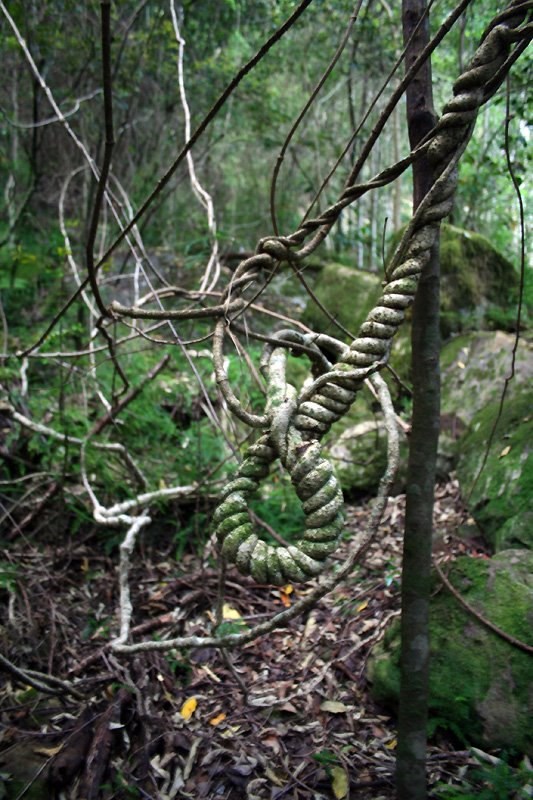


We found this really interesting vine up a slope from the trail and wanted to take the pics.


Here's another interesting tangle.
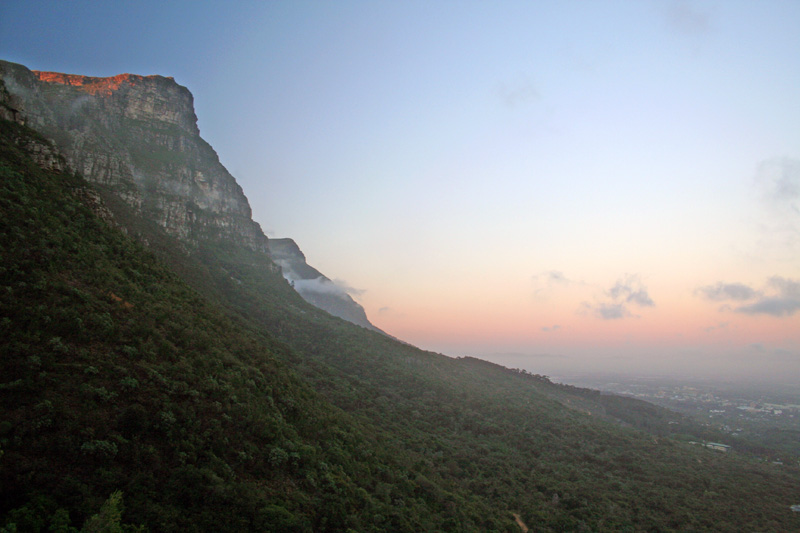


Here's the sunset view of the back of Table Mountain as seen from the contour path. It's really fun to walk down the mountain in the dark and to hear all of the night sounds. We usually hear the Spotted Eagle Owls, Coucals and Nightjars. We've seen a fledgling owl learning to fly and we've been treated to the first fireflies of the season. Kirstenbosch is a magical place at night and I feel so lucky to be able to experience while I'm here for my field season.

Saturday, October 21, 2006

More interaction with the Western Cape Woodturners Association

I'm way behind on my blogging, but that's because I've been doing what I'm supposed to do while in South Africa - namely, collecting plants for my research projects. Here are a few pictures from the past week where I had time in the evenings to visit my woodturning friends.


Here's Bert Parker doing his duty at the Waterfront Woodturners stall. He had just received a copy of Woodturning Magazine and he showed me the article where my "Quercus rubra" piece was featured.


Last Saturday, some of the WCWA members took me to dinner at the Cape Town Fish Market to celebrate my birthday (a few days late, but that's ok by me). Here are Izak and Catherine Cronje.


L to R: Nick Laidler, Gigi Laidler, and Gerry (can't remember his last name -sorry).


Esprit Heestand and Dennis Laidler.


My self-portrait. Am I enjoying the South African wines? Yes!


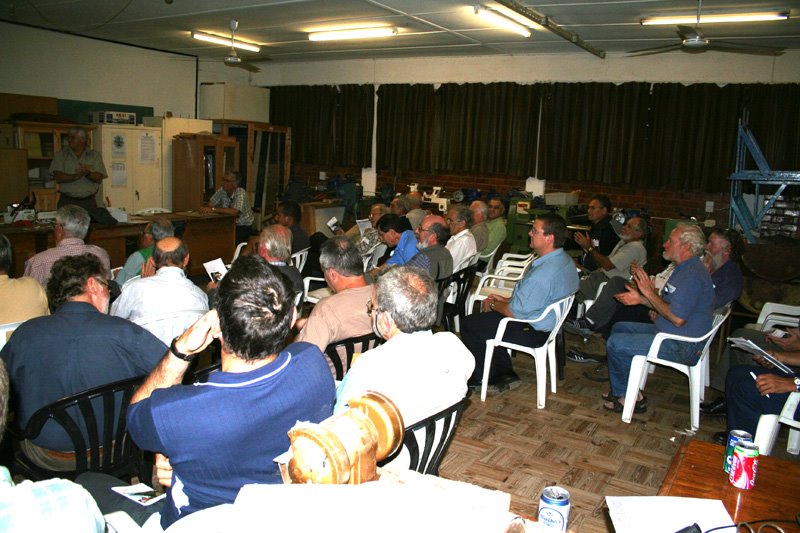
On Wednesday evening, Gigi fetched Esprit and I after we had processed all the day's specimens and we caught the tail end of the Western Cape Woodturners Association meeting. There was a good turnout for a chainsaw demonstration given by the local Stihl distributor.

Citrusdal to Ceres collecting trip

18 Oct 2006:

Mr. Willem Hanekom from Citrusdal found a population of a new species of Hyobanche several years ago. He took me to the site in 2001 and I wanted to go revisit the population to do the host root sampling and to check the status of the plant. We drove up to Citrusdal on Wednesday and Mr. Hanekom took us out to the site and to another one to collect Hyobanche atropurpurea. He had warned me that the first site had burned last year and that he hadn't seen the new species there this year. I still wanted to go and have a look, so we did check out the site pretty thoroughly.

The first site visited was just beyond the area where the new species was found. Mr. Hanekom had seen Hyobanche atropurpurea here last year. It took a bit of looking before we found some inflorescences, but these were certainly usable. This is a new population to my survey, which was also a plus.

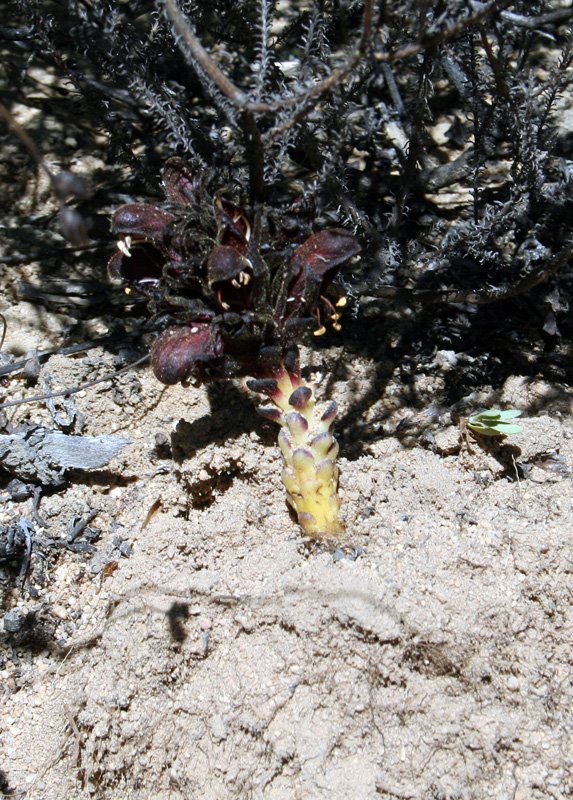
That dark blob in the center of the picture is an inflorescence of Hyobanche atropurpurea. The flowers are so dark purple that they appear to be black.


Here's a closer look at the inflorescence. This one is in pretty good shape. I think this species may be rodent pollinated, but that idea will have to be tested when I have a lot more time to spend in the field. I really need to arrange a sabbatical here that would cover the entire flowering season for Hyobanche.


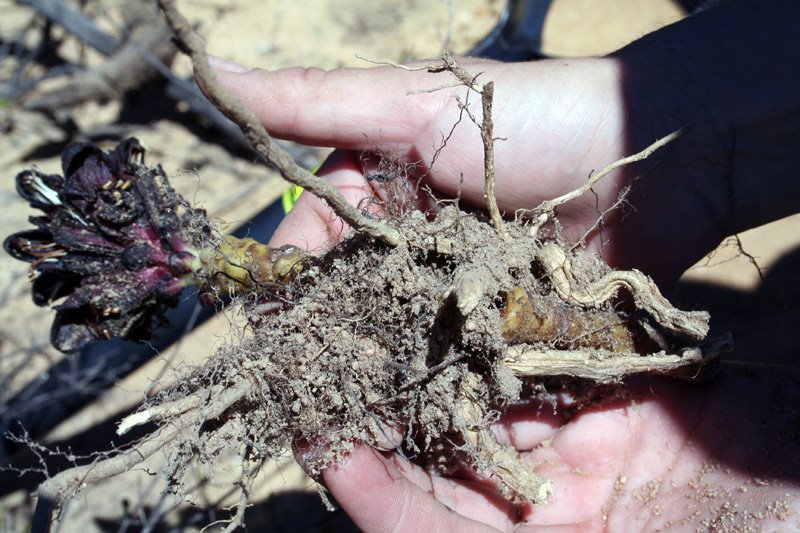
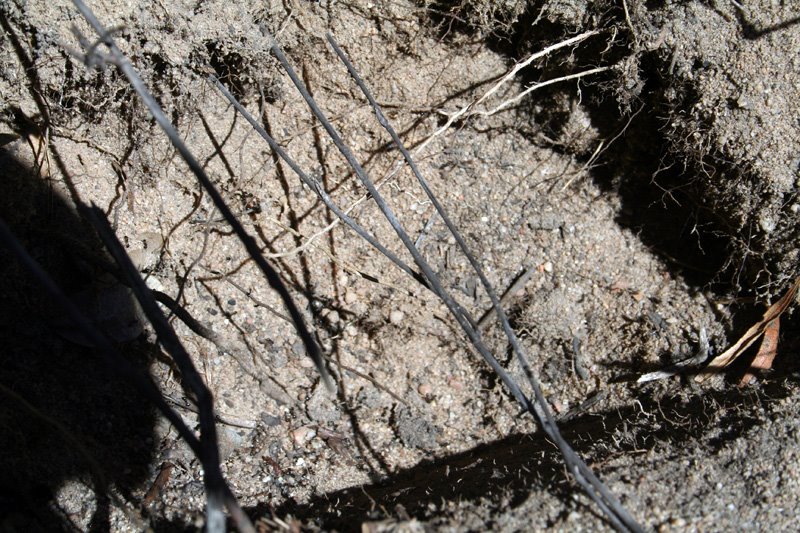
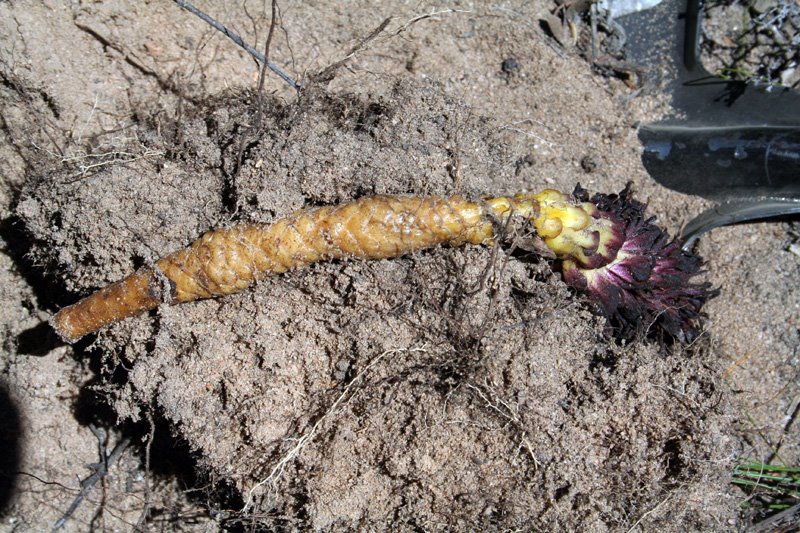
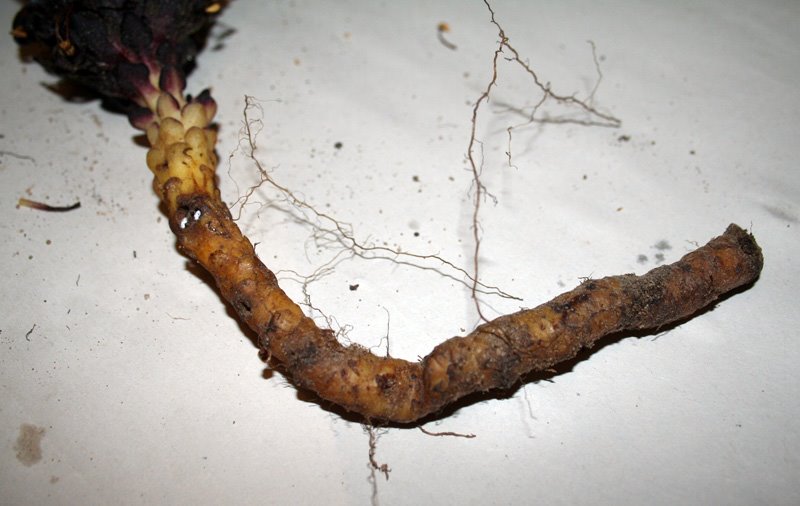
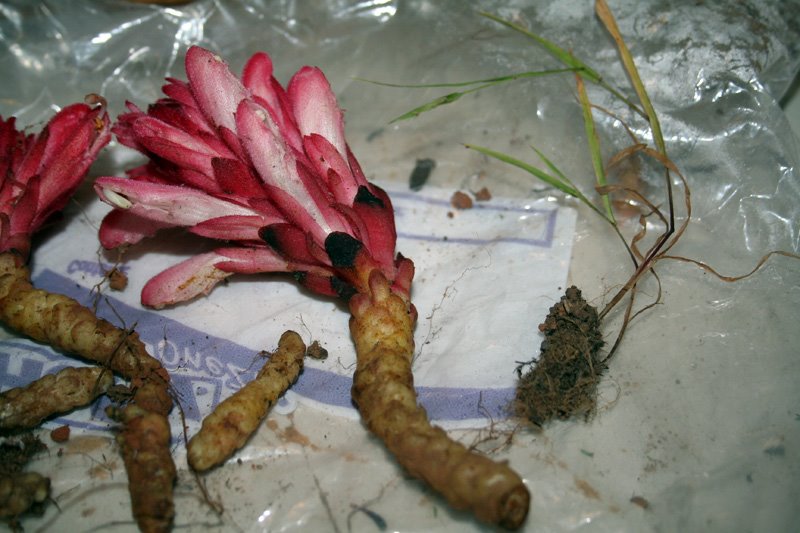
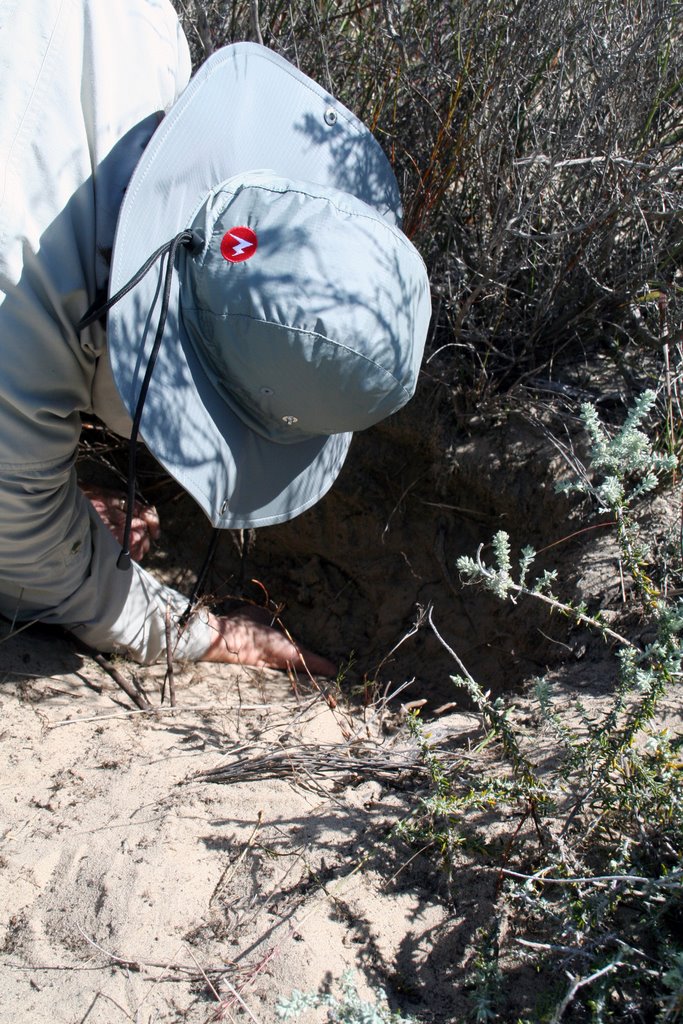
As usual, I excavated the rhizome system so I could collect host roots attached to the haustoria along the stem.


There has to be some good root tissue stuck to the parasite somewhere in this mess.


Yep, got some big, fat, juicy ones that will yield a lot of DNA for the study.


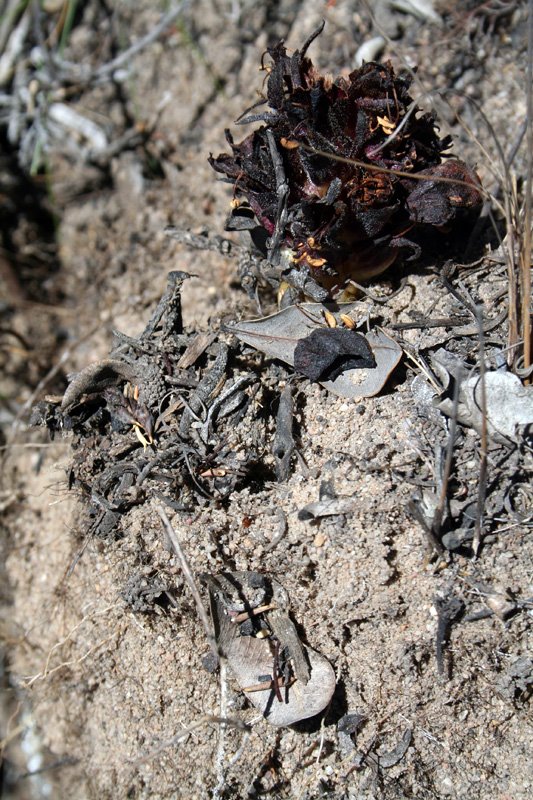
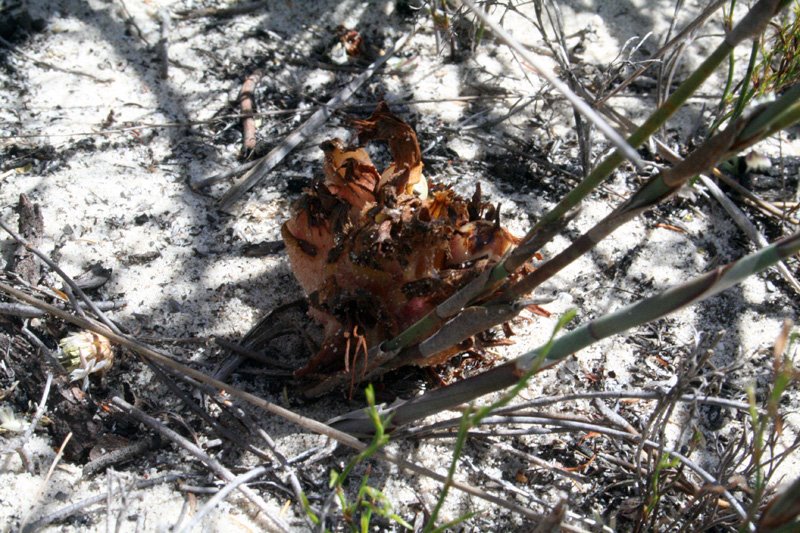
Here's another clump that was a bit past its prime.


I used a shovel to pop out a plug of turf so I could take my time in removing the soil around the rhizome.


I gauged the depth of that plug pretty well, since this is what was exposed on the bottom side.


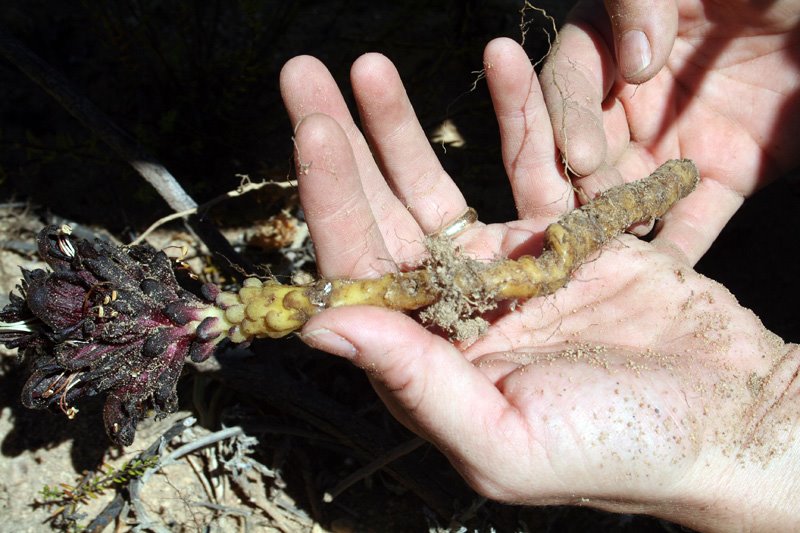
This rhizome yielded some excellent host root samples.


Ants were also associated with this collection. That gray blob in the lower left corner is an ant nest building, which probably started in the old inflorescence of Hyobanche.


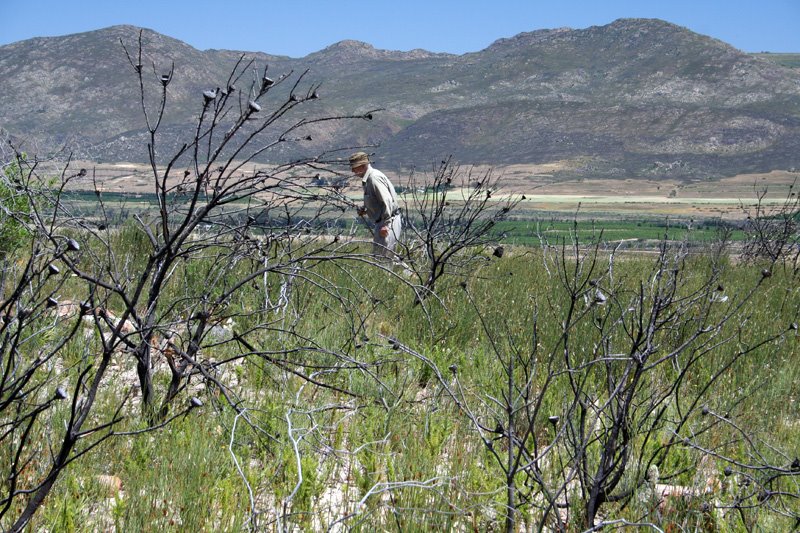
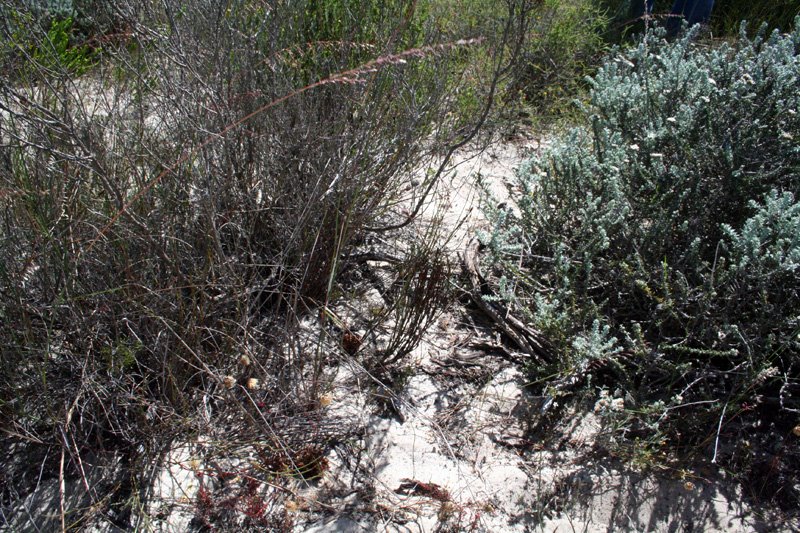
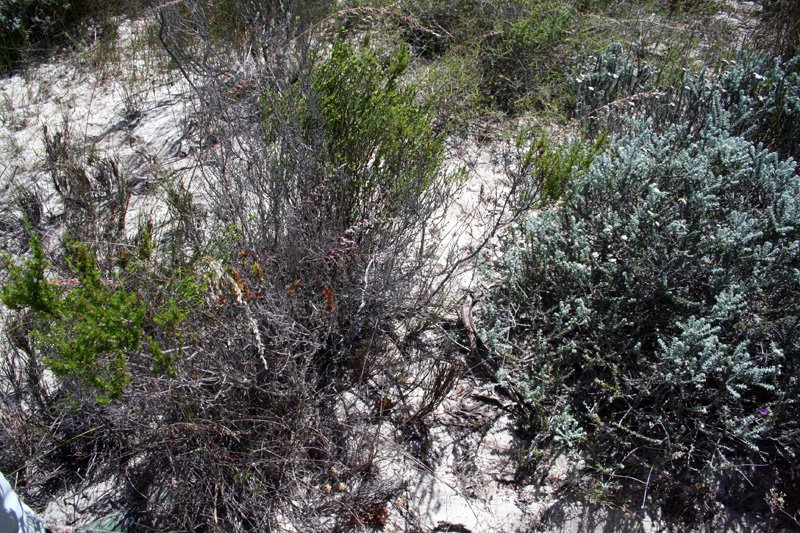
This is the second site we visited on Wednesday, which is where a new species of Hyobanche occurs. We spent a lot of time scouring this farm for any signs of the plant, but it's not up this year at all. Mr. Hanekom will monitor the site over the next few years and let me know when he sees the Hyobanches reappear.

It's a little scary to think that this new species has only been found on this one site and that a fire may have wiped out the population. I think the plant is still there, but won't flower again for awhile.


Here's Mr. Hanekom looking around the site. He walks the veldt pretty regularly and is very fit! He also knows the flora of this region like the back of his hand.


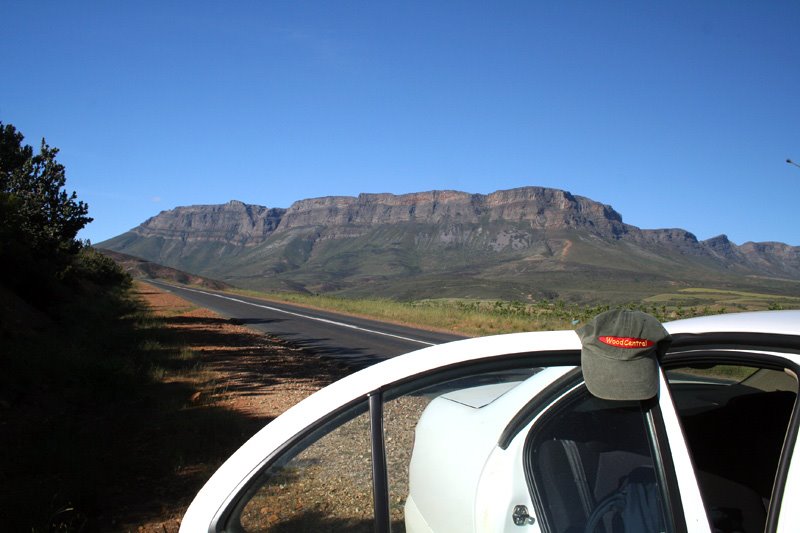
After dropping Mr. Hanekom back at his home in Citrusdal, Esprit and I drove toward Ceres on R303. Part of this trip was driven on gravel roads, but most of the road has been upgraded now to a nice paved highway.

Ceres is known for its fruit production and we saw plenty of citrus groves along the road. The next stop was at the bottom of Gydo Pass where I had previously collected Hyobanche sanguinea.


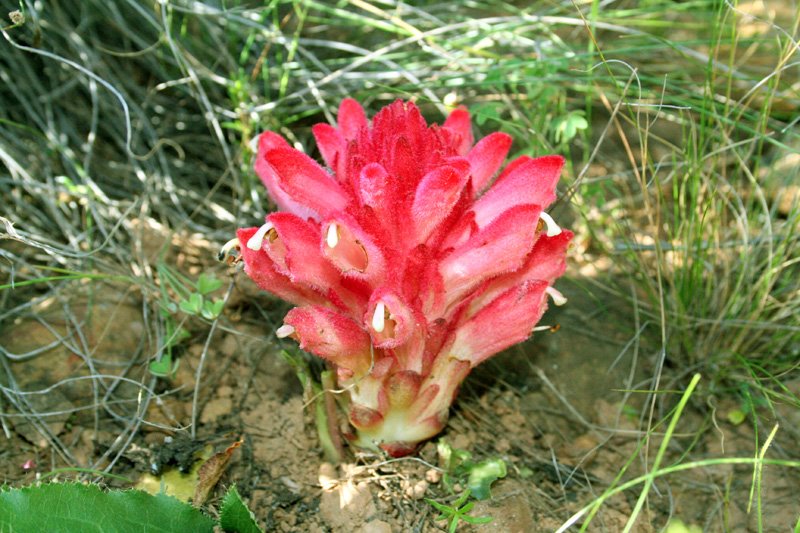
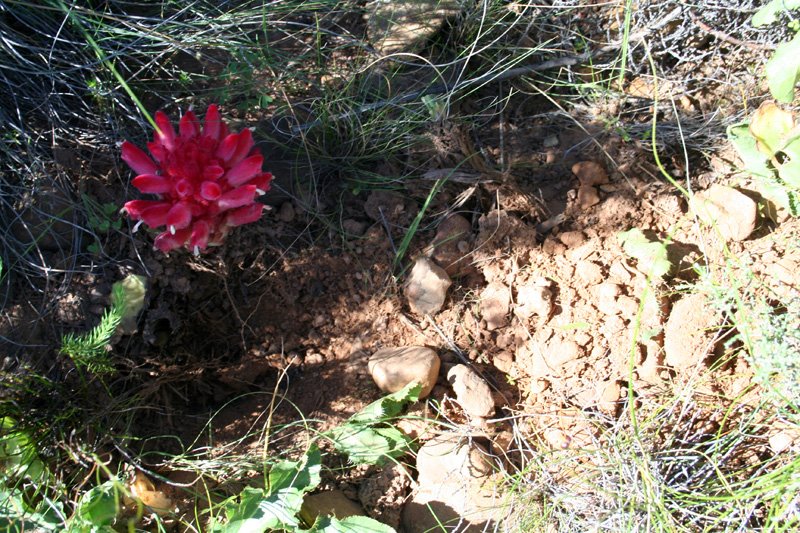
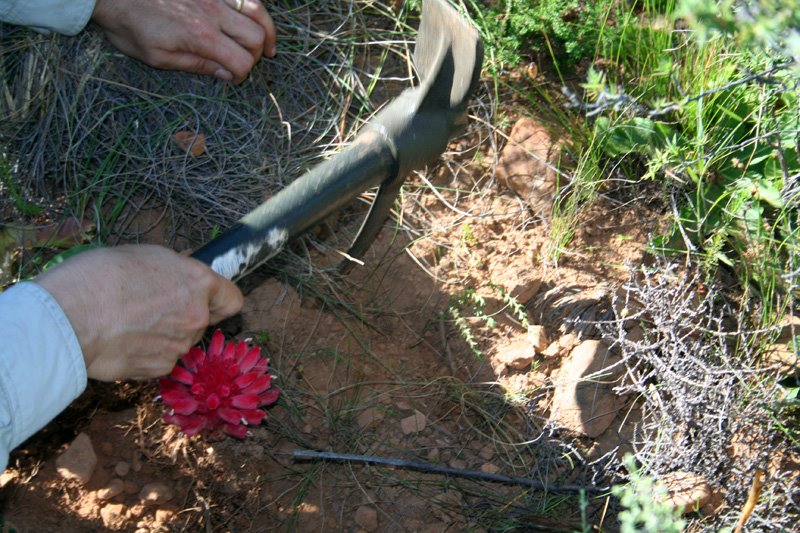
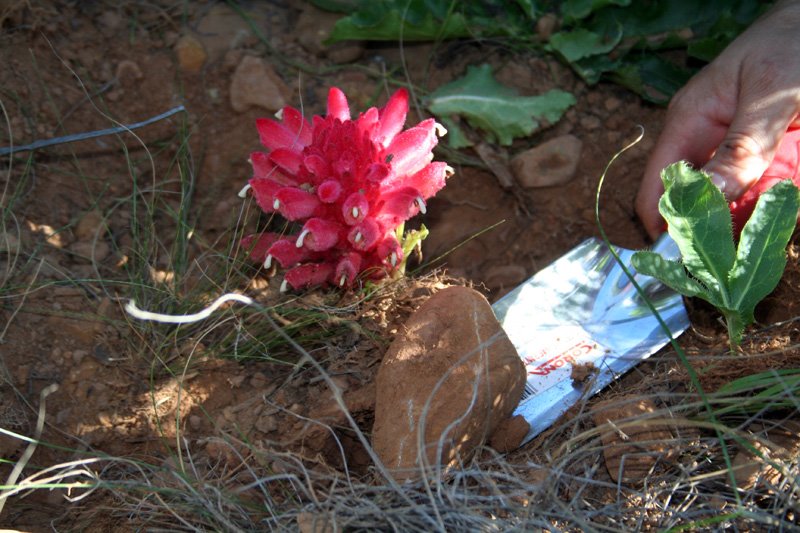
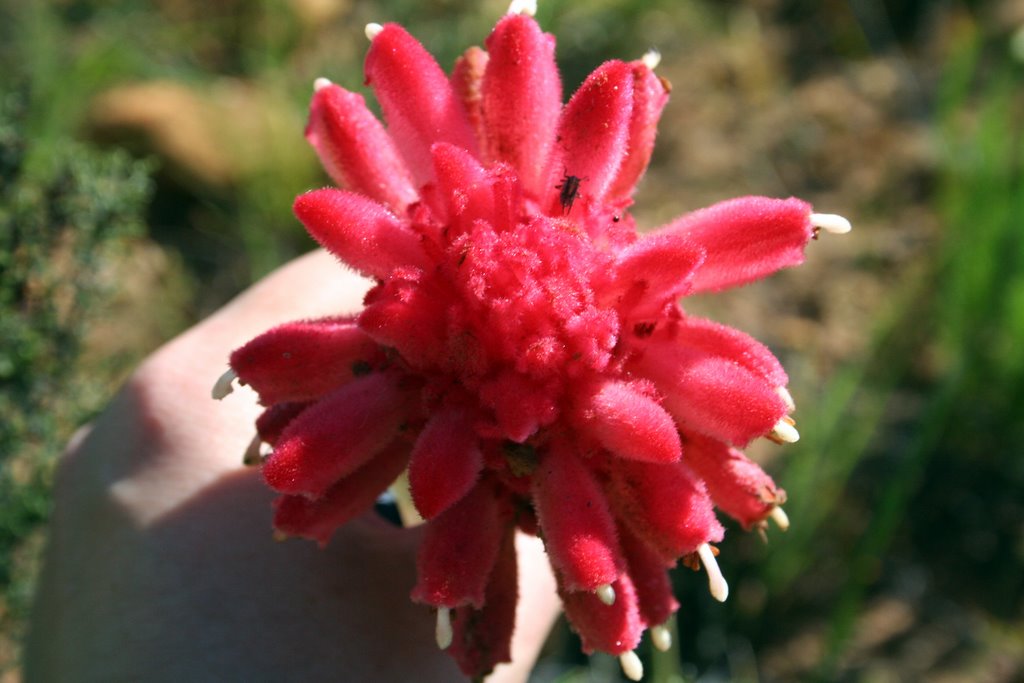
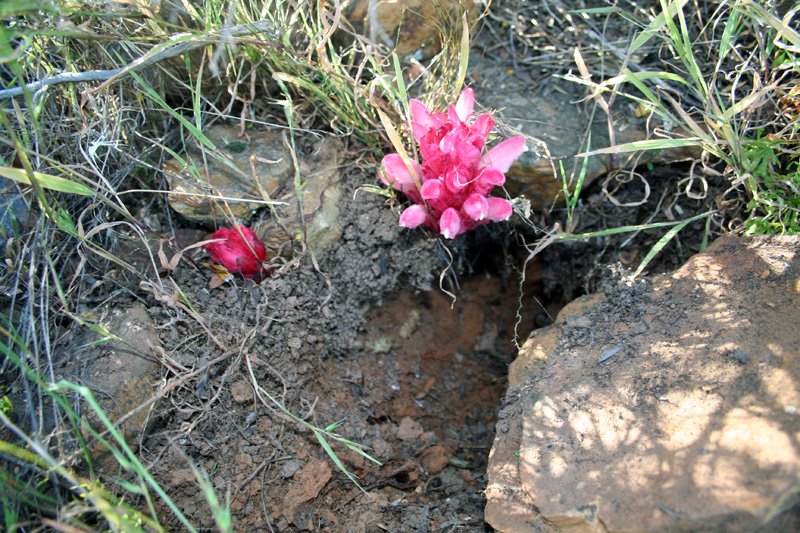
Hyobanche sanguinea was in full bloom here. This form looks a lot different than the west coast form, but there isn't much difference at the DNA level. The differences are in color, and the shape of the corolla mouth. I'm not sure as of yet how I'll treat these differences in my revision of the genus.


The soil here is derived from shale and there are a lot of stones that make digging with a shovel or trowel impossible.


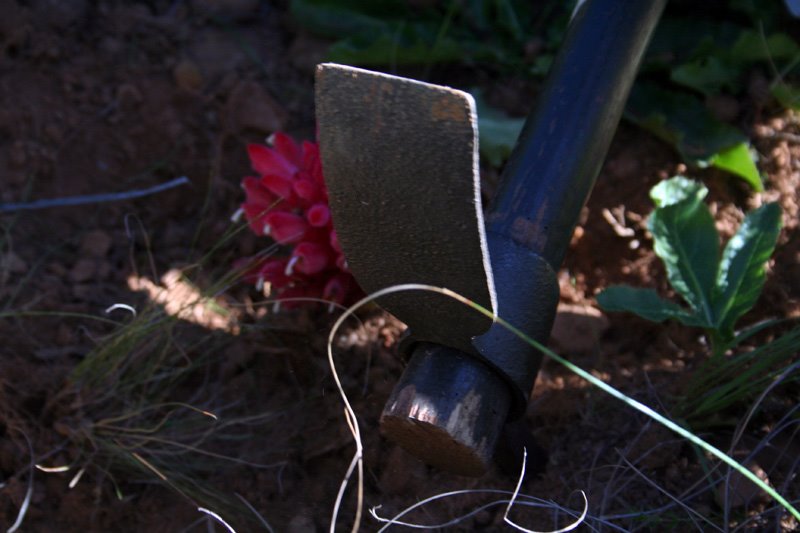
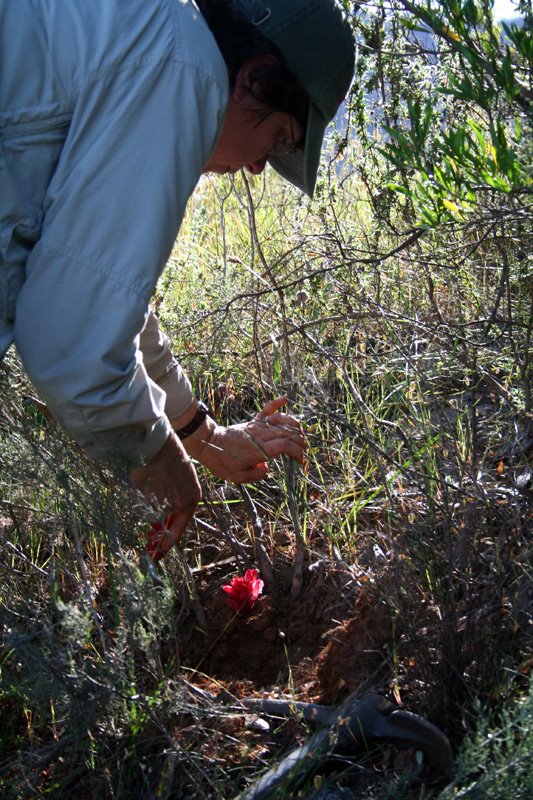
Time for the pickaxe! It's the only tool I've found that can handle this type of soil, and it's a lot of effort!


The trowel is useful for wedging out the loosened stones. It's pretty tough going to excavate without damaging the rhizome of the Hyobanche I want to sample.


I have to alternate between the pickaxe and the trowel to get down to the zone where the host roots are attached.


It's such a cool plant! The flowers are very fleshy and full of nectar. They're probably pollinated by birds, but I haven't done that study as of yet.


This one was on the road cut, and it had it's own special challenges for excavating. I found some muscles that haven't been used for awhile. Ouch!


Hmmm, something big is in the way. Let me think about this for a second.


That huge stone on the right side of the picture was a bit challenging to remove. Once it was out of the way, I could see all the roots attached to the parasite.


And, better yet, I was able to find a host plant physically attached to the parasite. I can definitely say that Bromus is a host plant of Hyobanche. I wonder what else is being parasitized? The DNA survey will give me the answers.

Thursday, October 19, 2006

A visit to Rondeberg Private Nature Reserve

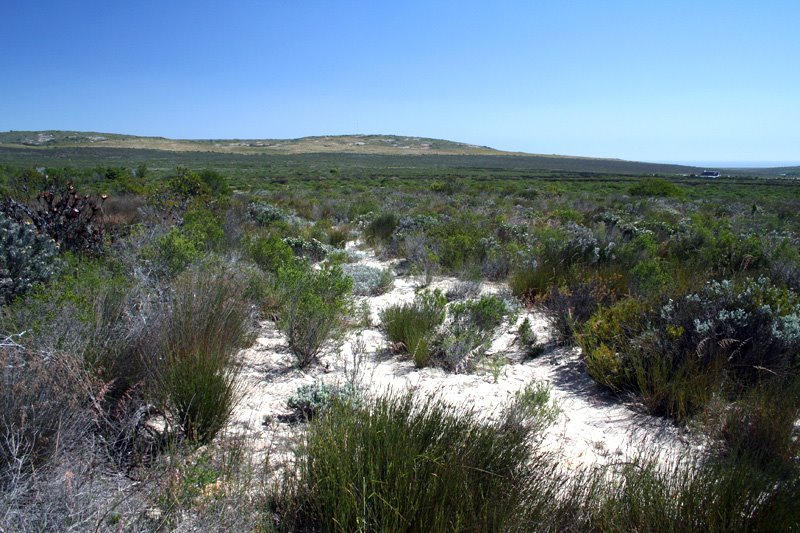
After the work at Koeberg Private Nature Reserve we headed north to Mark and Carol Duckitt's private reserve. They have done an excellent job of restoring and maintaining the West Coast fynbos biome. It's a beautiful reserve.

I last visited the reserve in 2002 and had collected a couple of populations of the west coast variety of Hyobanche sanguinea. The plants were past flowering, but we were able to find some of the spent inflorescences with the help of Carol, who had been up to the sight just a day or so previously.


Again, this is not what the plant typically looks like, but it's good enough for collecting host root tissue.


Here are some of the surrounding shrubs - all potential host plants.


More potential hosts.


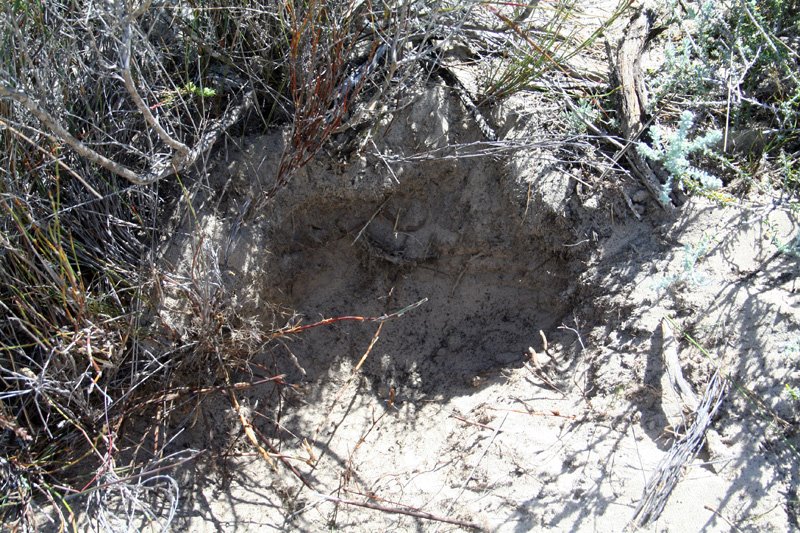
And, surprise, another excavation hole.


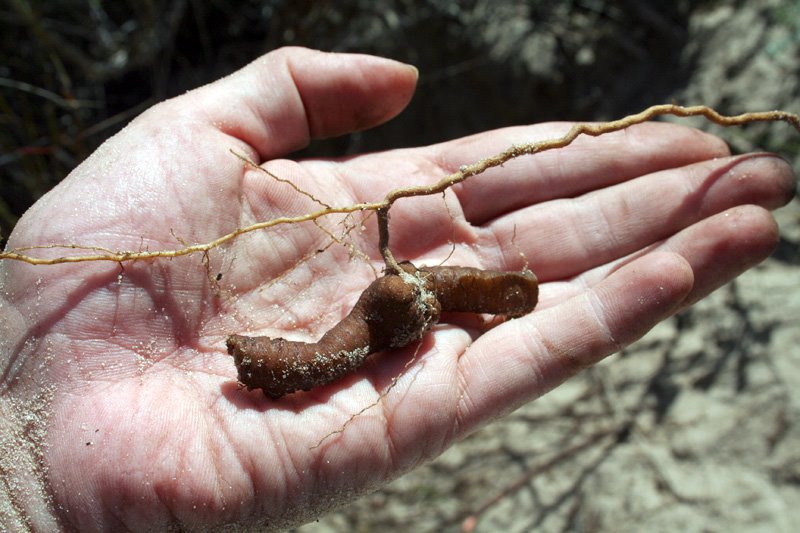
You can get an idea of what I'm looking for in these excavations. I want to find the rhizomes that have a lot of host roots attached.


This is a big score! I can get a lot of DNA out of this root tissue.


One of the hypotheses I've developed over the past few field seasons is that Hyobanche may play a role in nutrient cycling. It seems as if the old rhizomes decay in place and provide nitrogen to the ecosystem. Given how fleshy the rhizomes are, I think it's probably a significant contribution to the system.


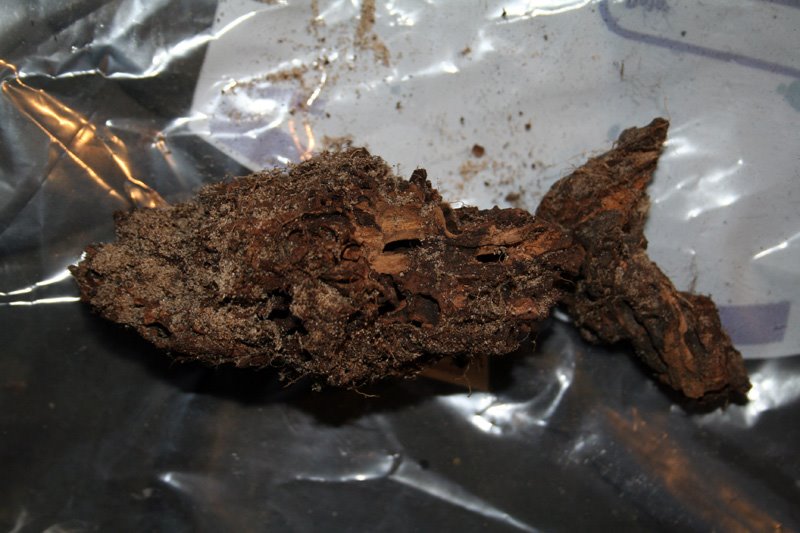
The other idea I've developed is that ants are closely associated with Hyobanche. I've found nests in the inflorescences. I think these serve as a nursery for a full-blown colony that develops from the infected inflorescence. In the excavation holes next to many of the Hyobanches are these small ant colonies. I wonder if the ants add material to the inflorescence to make this hard colony.


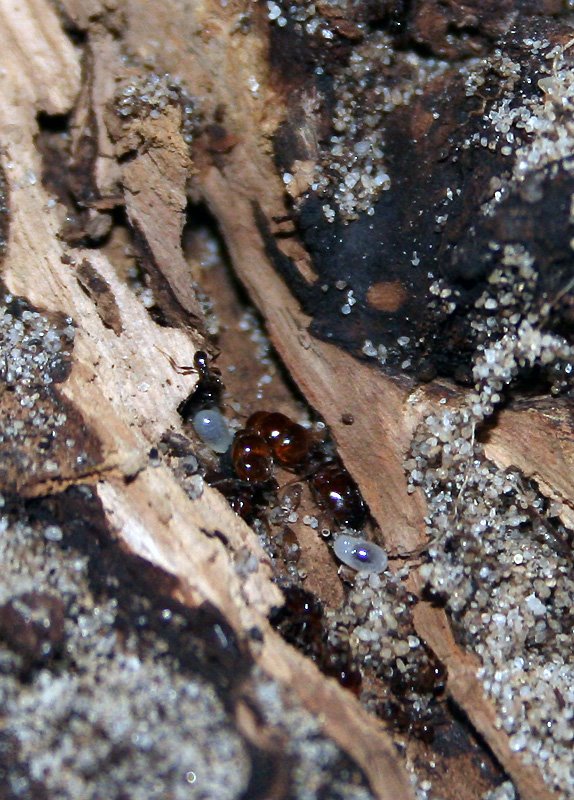
I wanted to see what the inside looked like. The colony is constructed from many chambers full of larvae and pupae. There were several different sizes of ants -probably the different castes of the colony. I don't know much about ant biology, but I'm really curious about the relationship between these organisms (parasitic plant and ant).


Heres the section I cut. It looks like that central rachis may have been the Hyobanche stem, but I'm not really sure about this as of yet. I need to do a serious ecological study at a site where I can be there throughout the entire growing season.


Here's a close-up of the ants in the colony.


Ok, last little bit about the Rondeberg Private Nature Reserve. Carol and Mark have a wonderful conservation center for visitors.


This is a classroom,


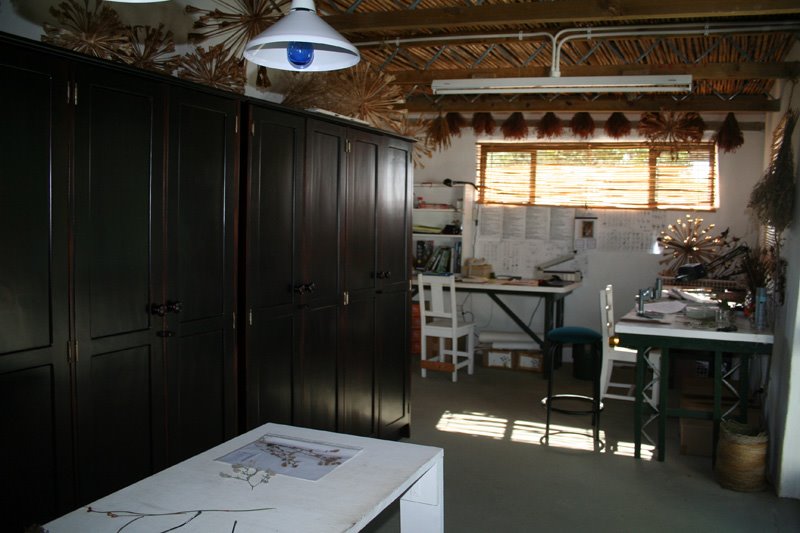
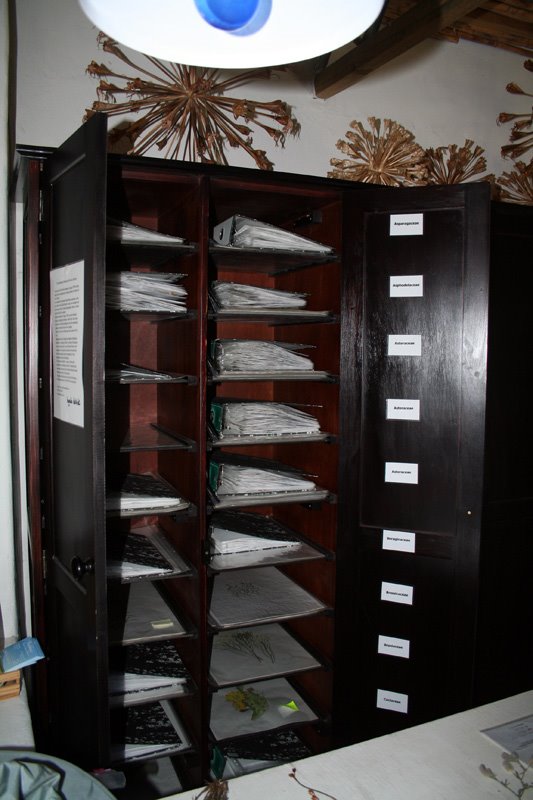
and this is the Rondeberg herbarium where each of the species on the reserve is documented.


Here's part of the collection. The cabinets are very impressive. Thanks, Carol and Mark, for letting me study Hyobanche on your private nature reserve!