Hyobanche is unique among parasitic plants in that it can form haustoria (organs of attachment) on the rhizome scales whenever a suitable host root makes contact. During my previous field season in 2004 I initiated a study to try to determine the range of host plants parasitized by Hyobanche. My approach is to sample host roots physically attached to a haustorium and use DNA sequencing to identify the host plant. I sample leaf tissues of candidate plants adjacent to the parasite and sequence those tissues as well. Even if there isn't a match for the ones collected, I can do a database search on genbank and get the ID down to genus for the host plant. It's pretty amazing that sometimes Hyobanche is in a pure stand of one potential host species, but the root attached is from a plant that's a long ways away from where the parasite is flowering. Sometimes more than one host plant is being parasitized simultaneously. It seems that shrubs in the sunflower family are favorite food sources, but Passerina, and a small grass are also parasitized. I'm still discovering the host range and this field season promises to be pretty productive in that regards.
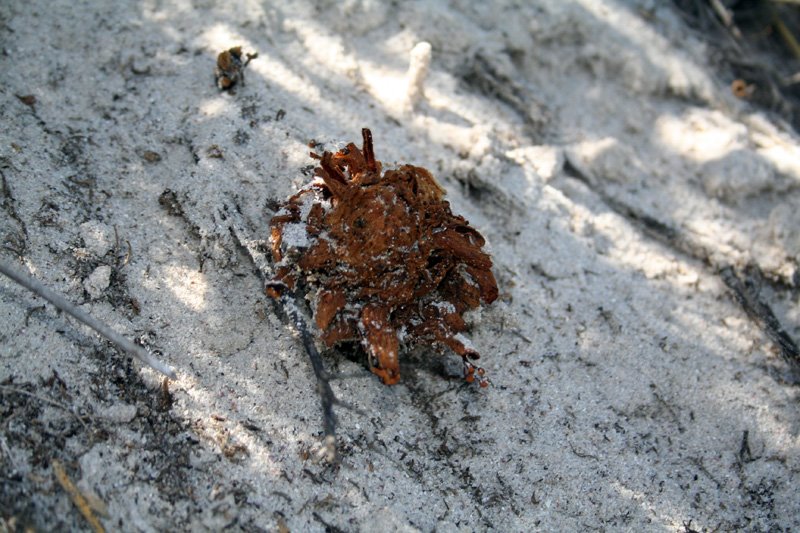 Here's the first find of the day. This is a new species I'll be describing and naming. This is not what the plant really looks like; it's well past its flowering season. I'll have to post a good example when I have my external drive connected and can access my pictures again.
I found this on a pretty steep slope, so the digging was a bit of a challenge.

Here's the excavation hole.
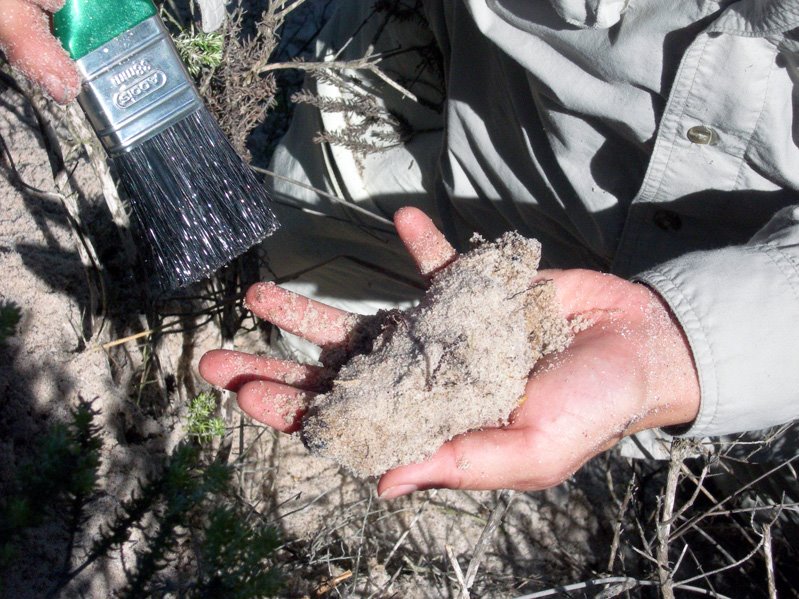
Here's a rhizome needing to be cleared of sand. A paint brush works well for loosening the sand without breaking the host root connection.
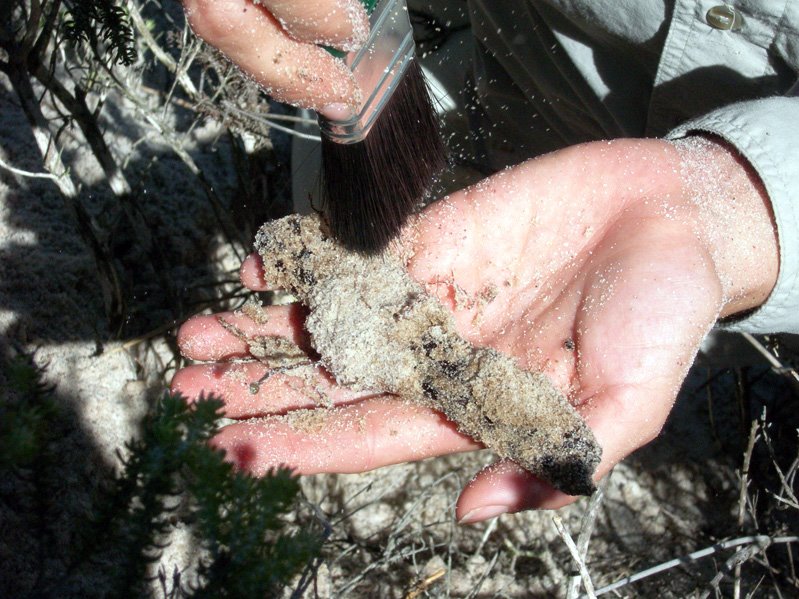
Patience is more than a virtue. Each find is essential to the study, so I don't want to waste any of the host-root connections.
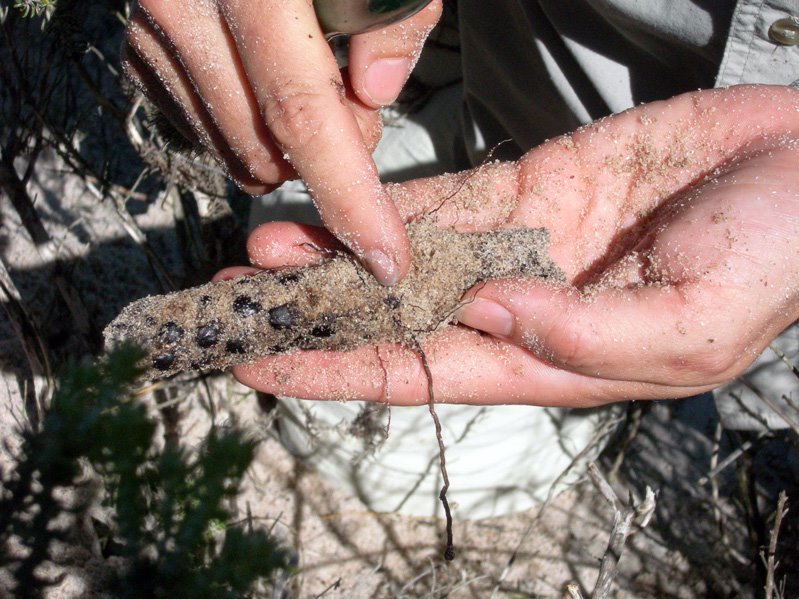
Here's the payoff - nice, big, attached host roots!
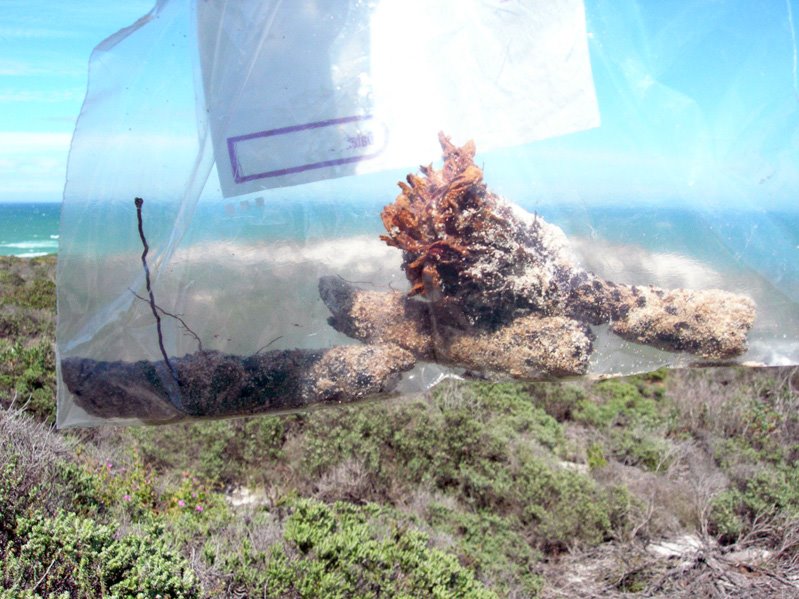
Everything goes into a sample bag for later processing.
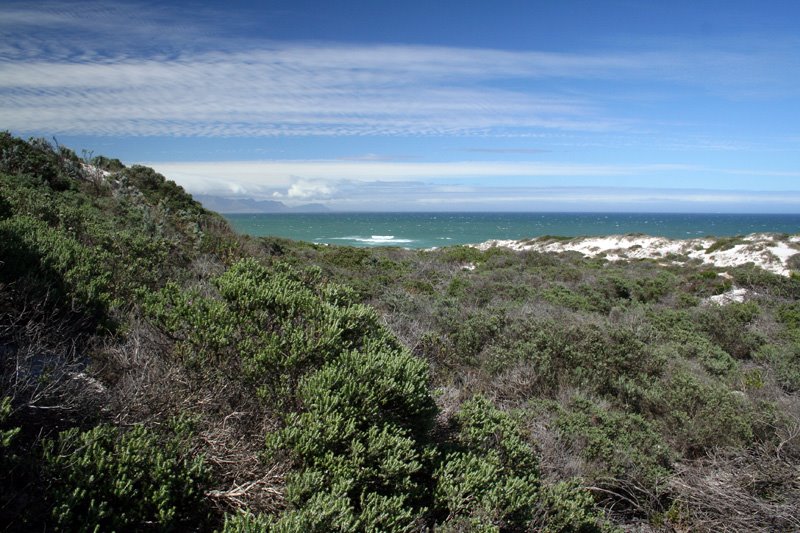
This is a habitat shot showing the type of sand dune vegetation where this new species occurs.

Here are some more plants that have finished flowering. These were in vegetation that was very different from previous collections.

This is one of the ones I decided to excavate from which to sample host root tissues.

Digging in sand is relatively easy if you're not having to dig on a steep slope.
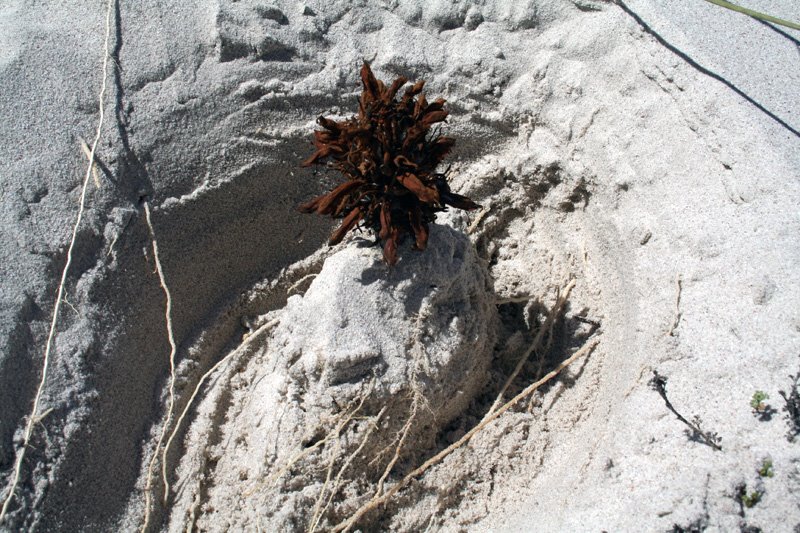
I excavate a trench around the plant and then gently remove the sand to keep the host root connections intact. This is delicate work.
After visiting the first site, we drove over the dunes and down a road to another site. What a pleasant surprise to come across a Cape Cobra crossing the road. We actually were privileged to see two separate cobras during our visit to Koeberg reserve. Here's a sequence of photos from the first encounter. I took these from the cab of the pickup truck we were in.
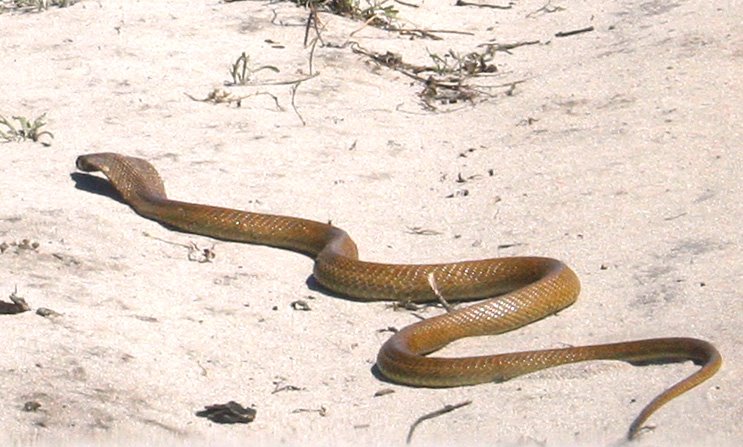
When we first saw this snake, it was upright with a full hood. I didn't grab my camera fast enough to snap that picture. In this one, the hood is still inflated, but the snake is slithering away toward the vegation.
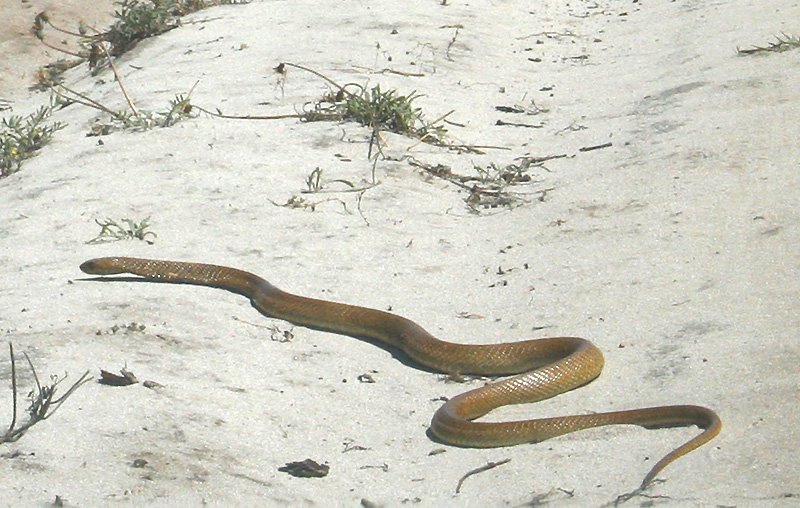
This is the yellow form of the Cape Cobra. It comes in a variety colors from this beautiful golden hue to black. This beauty was about two meters in length.
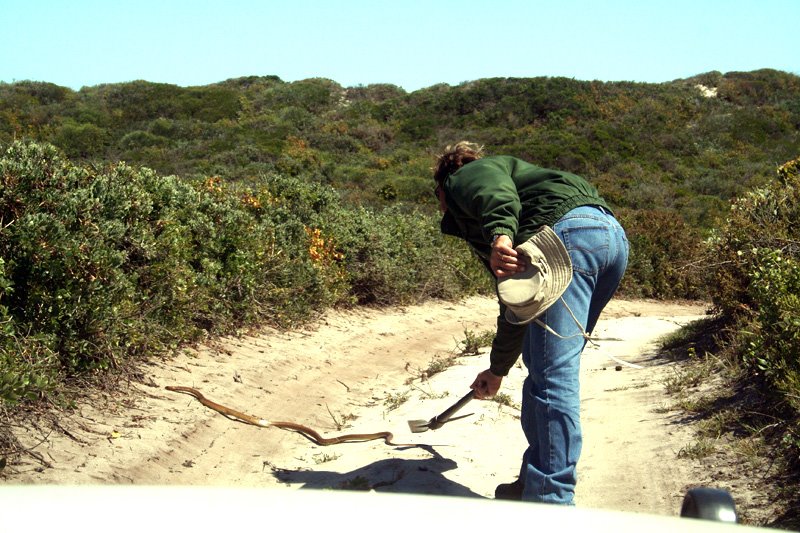
Hilton tried to get it back into a hooded position, but it wanted nothing more to do with us. Most of the snakes in South Africa would much rather be away from you than bother with revealing themselves, so it's always a treat to be able to see one.
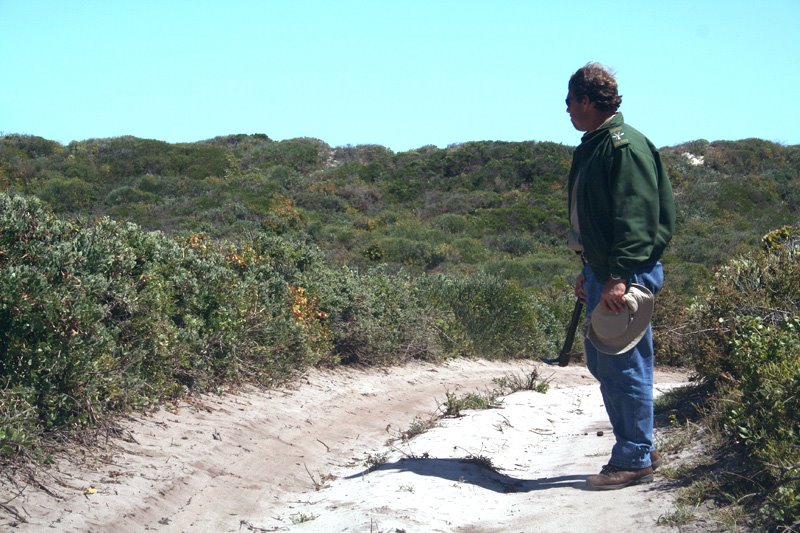
Awwh, come back and play with us!
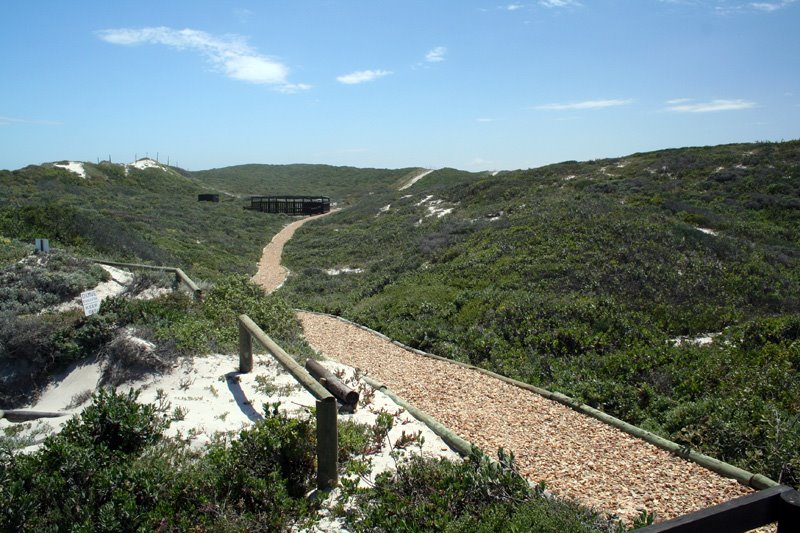
The second field site at Koeberg is a viewpoint called, "The Hut."
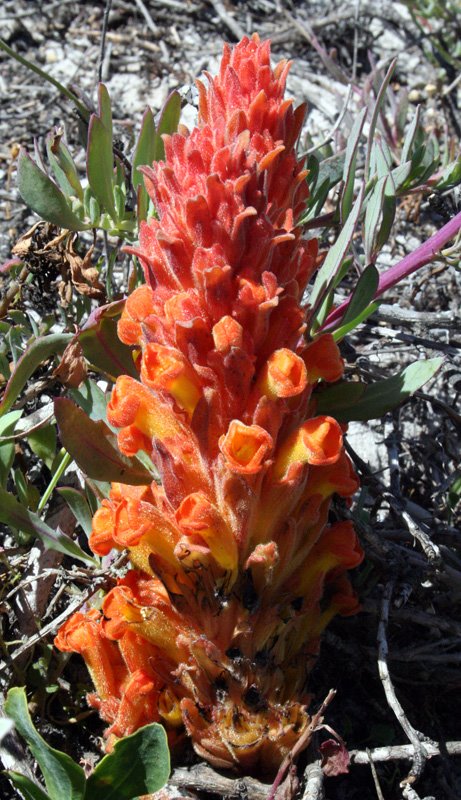
There's a small population of Harveya squamosa here. This is the closest related genus to Hyobanche. One of my graduate students did his doctoral thesis on Harveya.
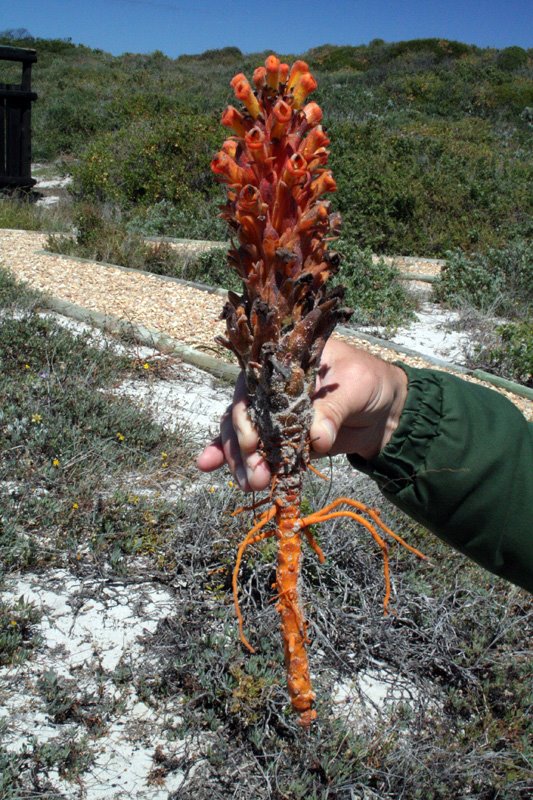
I wanted to take a look at the rhizome off this species to see if there was any evidence of haustoria on the rhizome bracts. Didn't see any, but there is a nice collection of secondary roots produced by the parasite. You don't see this type of situation in Hyobanche.

Here's a ragged looking specimen of the west coast form of Hyobanche sanguinea. Again, this well past its prime and not characeristic of what this species looks like.

Another excavation. Sand is easy for digging, but very abrasive to the hands.
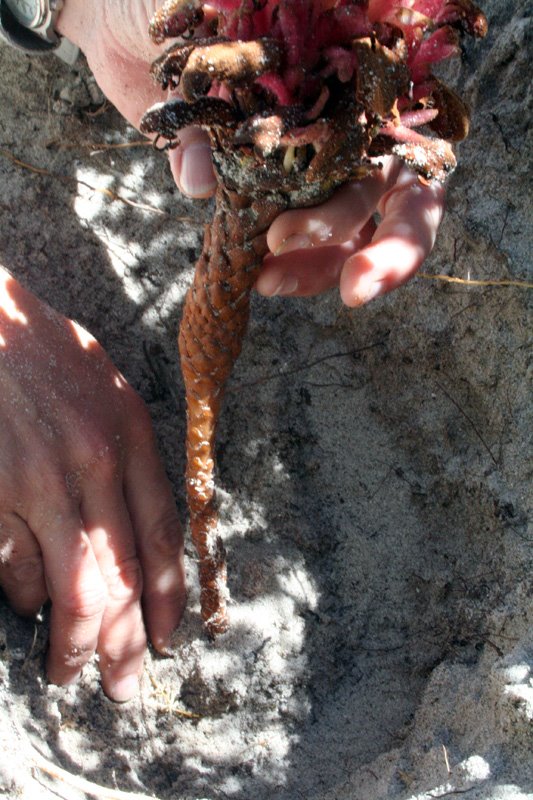
There's a lot more than meets the eye when you excavate the plant. If I were to dig up a square meter, there would be dozens of parasite rhizomes present underground.
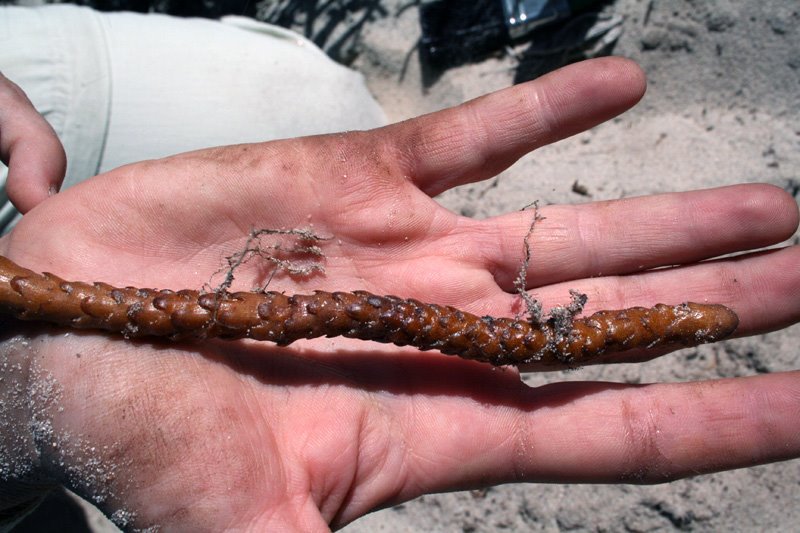
This is a good view of the host roots to be sampled. You can also see how dirty I get during these excavations.
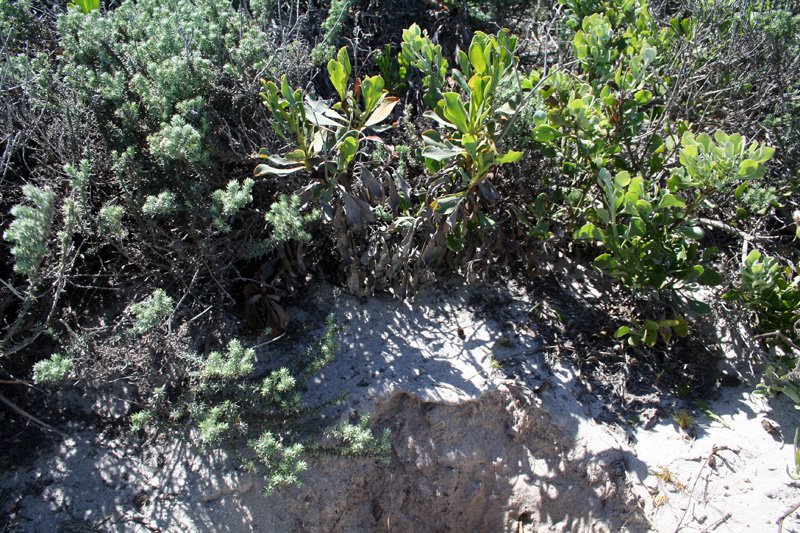
The excavation hole and a view of some of the potential host plants around this specimen.
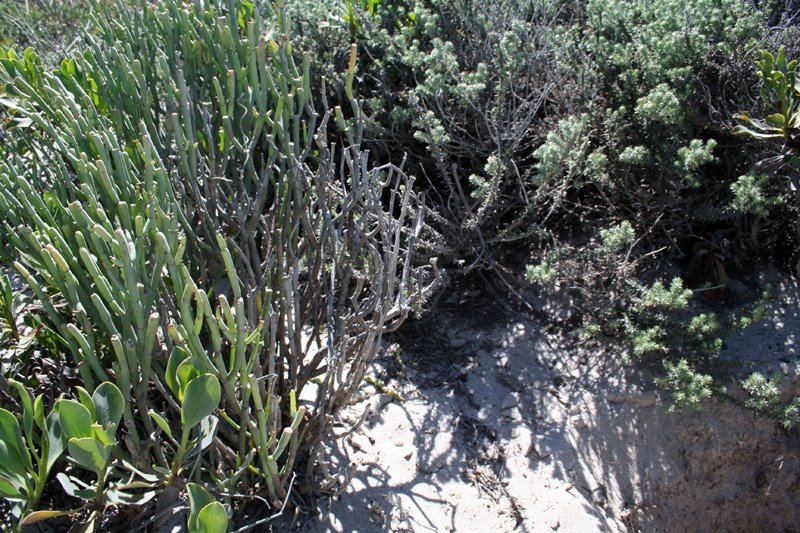
More potential species on the other side of the hole. I sampled leaves from each of these plants.
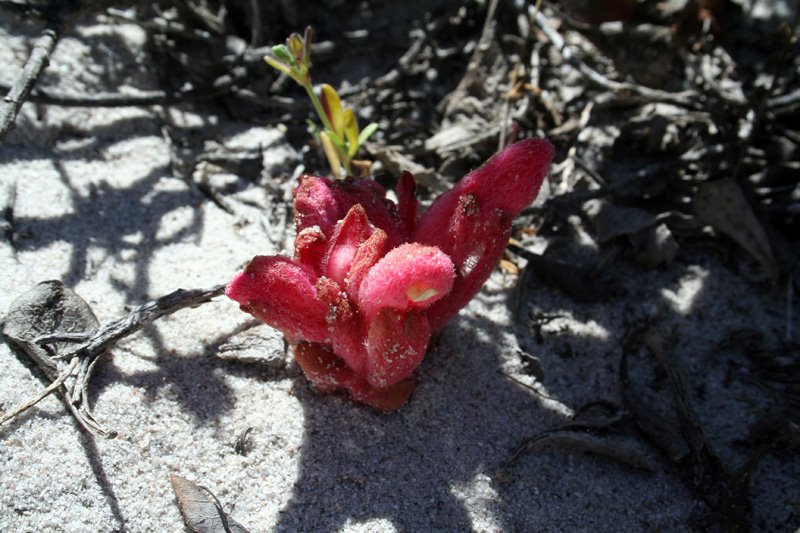
Finally, a fresh specimen. It's like going on an Easter egg hunt and finding the grand prize when you finally find a good specimen.
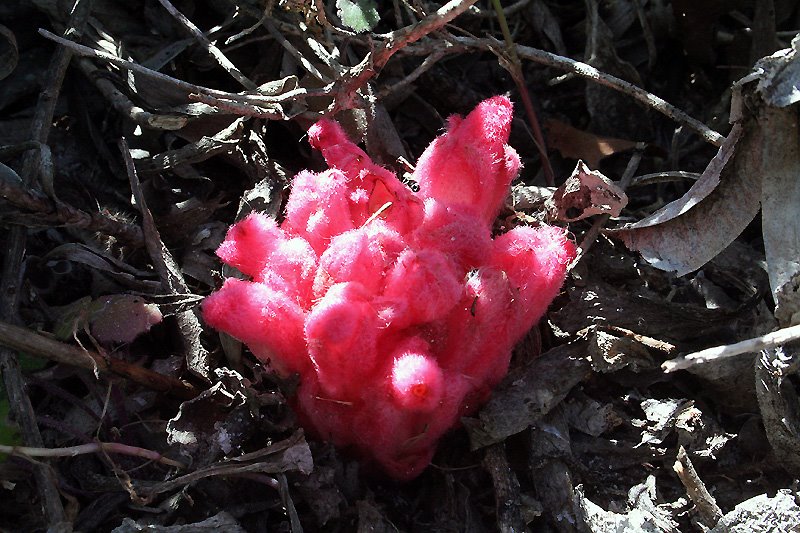
Here's another nice looking one. Isn't it cute???

Another specimen, another hole. Boy, am I getting good at digging. I guess my associates degree in landscape horticulture is good for something. . .

Here's an idea of how big this plant really can be. I suspect that what's left underground is about ten times this size.

Beautiful host roots to sample. Yes!
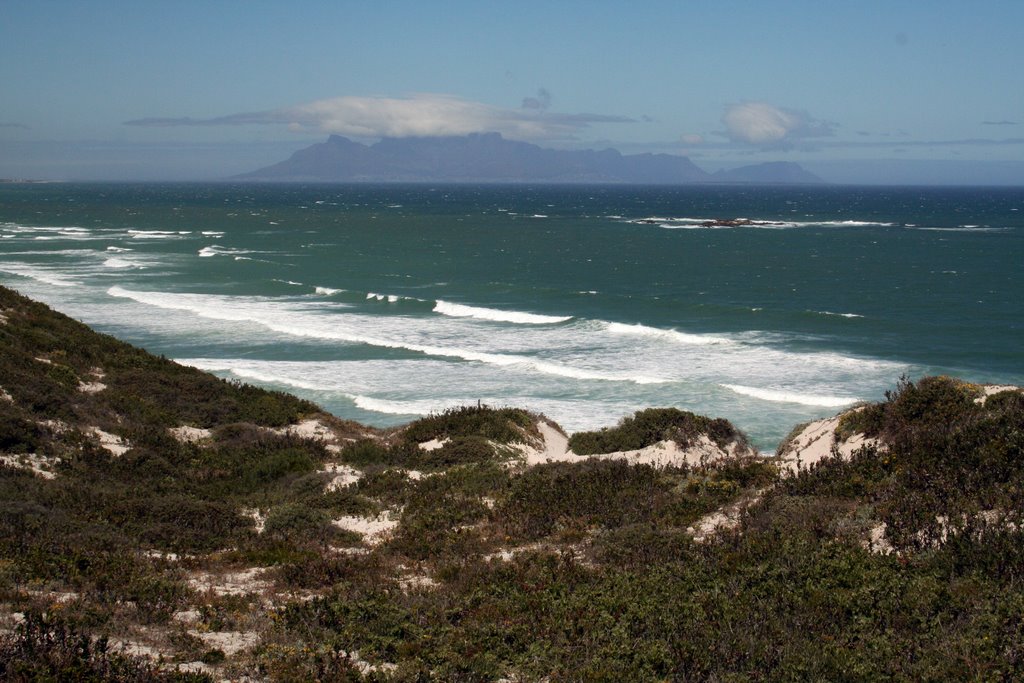
Here's the view from The Hut. It's a nice place to see whales when the weather is calm. The wind was blowing very hard all day on Tuesday, so I was pretty severely sandblasted by the end of the day. Sand in my hair, sand in my clothes, sand in my teeth - ick!
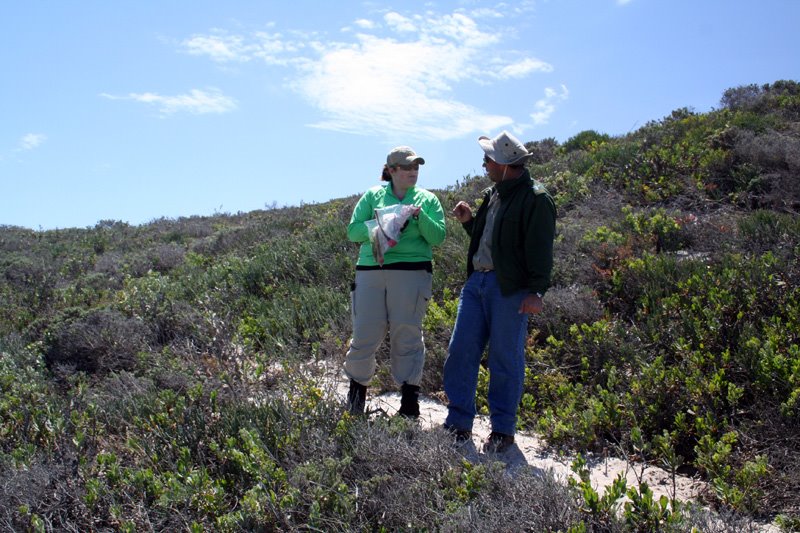
Esprit (left) is an excellent field assistant. She's very helpful as an extra pair of hands and my memory bank. (Where did I leave my glasses???? "Dr. Wolfe, don't forget to pick up your GPS unit.")
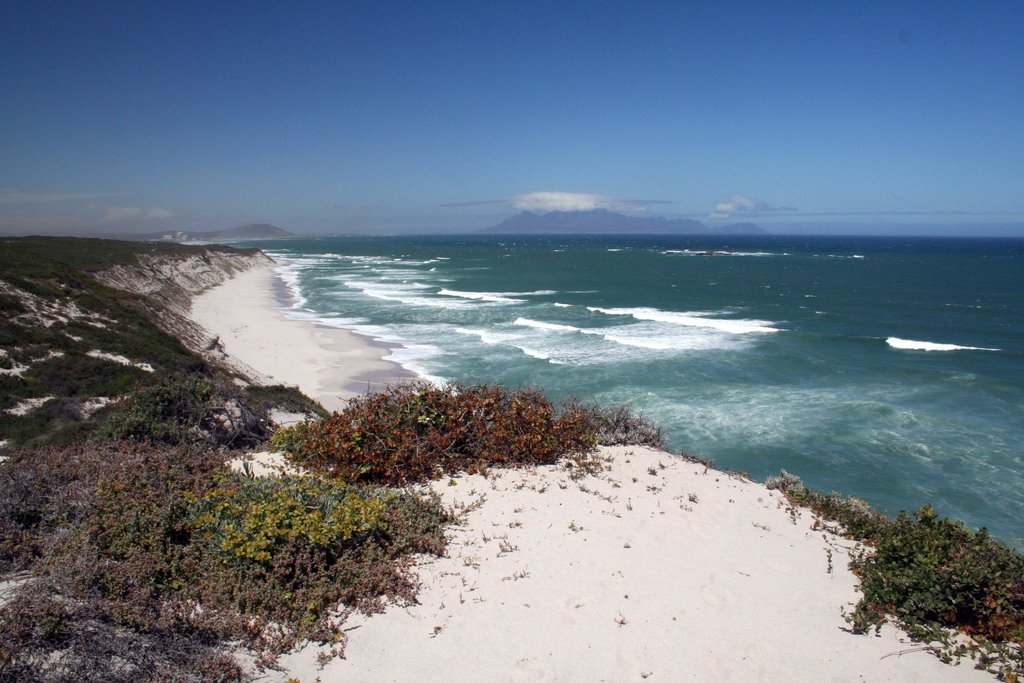
The coastal dunes are beautiful, but somewhat challenging to climb.

Another habitat shot. Disturbance and open patches of vegetation seem to be important to the flowering of Hyobanche.

Just off the coastline is a small island swarming with sea lions. All those brown dots are sea lions basking in the sun.

On the way back to the conservation office, Hilton drove us through part of the reserve where conservation efforts are underway. This is a restoration project where rooikrans, a terrible invasive shrub, is being removed. It takes only a couple of years for the native vegation to come back once the rooikrans is destroyed.

The reserve is also stocked with wildlife. Hilton drove us near some of the animals so I could photograph them from the truck. This is a cape zebra.
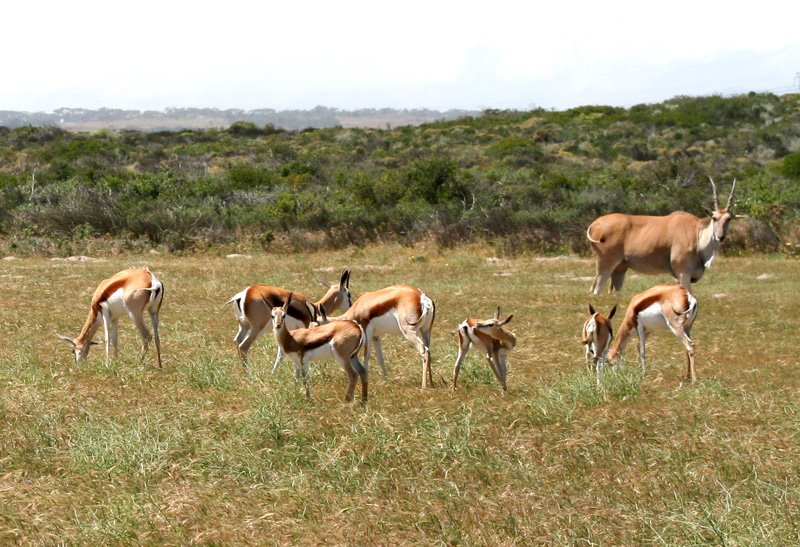
A group of antelope. The large one on the right is an Eland. I think the small ones are springbok, but I may be mistaken. I'll have to look it up in my mammal field guide.
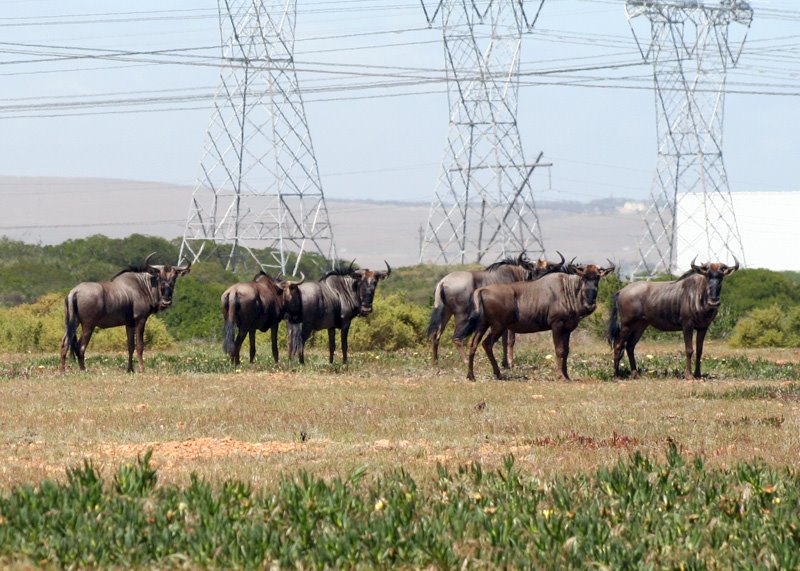
This is a small herd of wildebeest - standing in front of the power lines coming from the nuclear power plant.

Finally, here's a mother bontebok and her calf.

Back at the conservation office, I sat in the shade and processed specimens. This takes a fair bit of time - everything has to be cataloged and assigned an accession number. Tissue samples have to be collected and put into silica gel to dry.
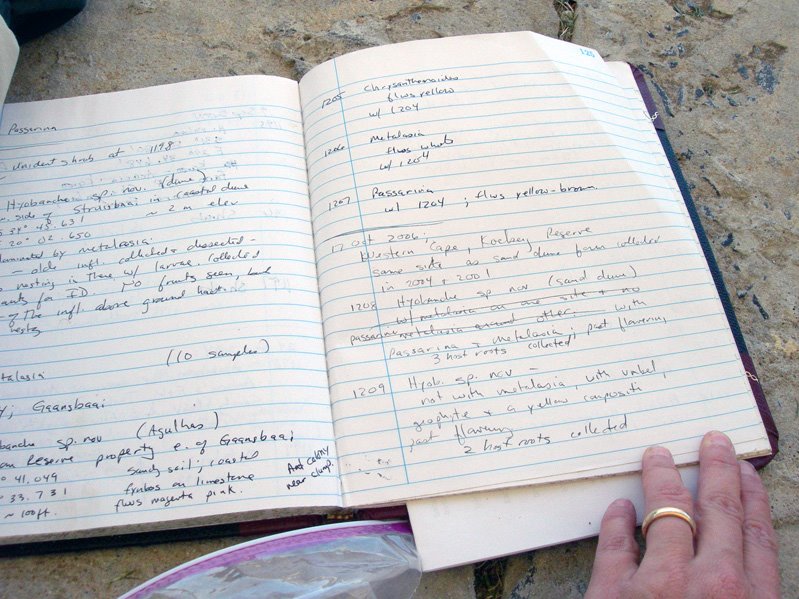
My field notes also have to be written before I forget the details.
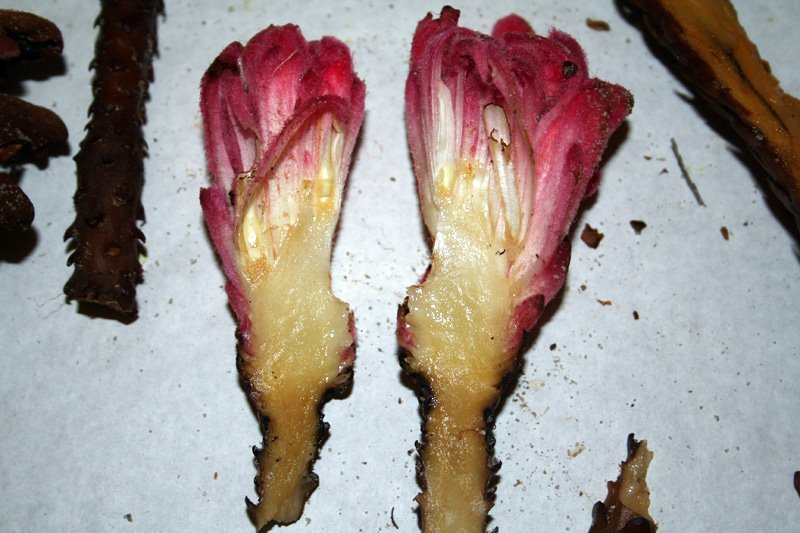
We pressed specimens after getting back to my guest house at Kirstenbosch botanical garden. The parasitic plants are thick and succulent, so I usually split them before putting them into a plant press. This is a healthy one.
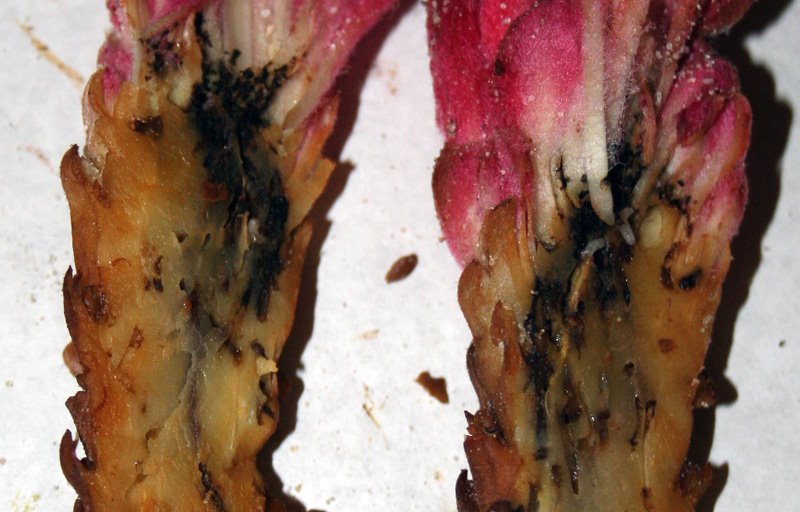
This one doesn't look quite as nice as the other one.
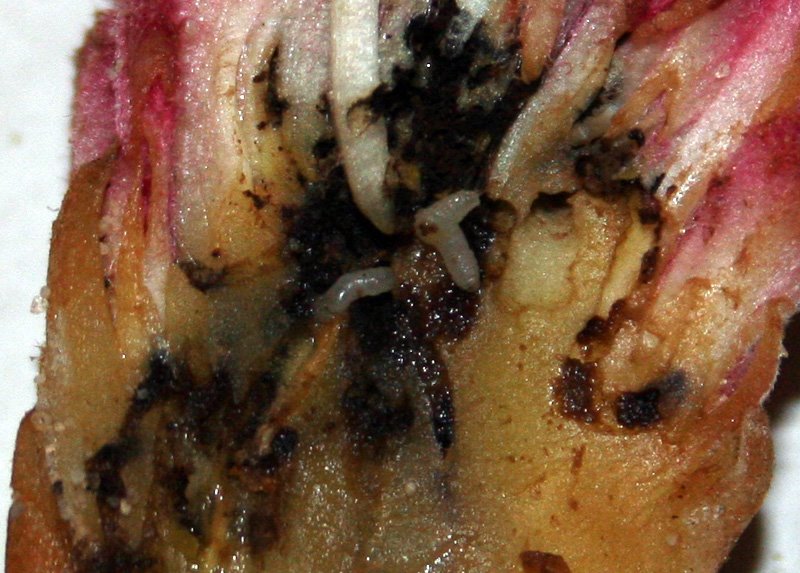
Many stems are infested by stem borers, and I've found ant colonies in the dune species I've sampled. These larvae are tunneling through the succulent stem tissue. The black material is their frass. I wonder if the ants come in after the borers have made holes in the stem?

This is the split stem of the Harveya squamosa specimen sampled at Koeberg. This is a much larger and more serious stem borer infestation. At least I didn't split the larvae - that would be even more disgusting.

























 Posts
Posts


